


Standard Velvet vs. Custom Microfiber Jewelry Pouches
1. The Core Importance of a Jewelry Pouch’s Touch Feel
In the luxury retail environment, the touch feel directly shapes customers’ first impression and consumption experience of a jewelry brand. A jewelry pouch is not merely a storage tool, but an intimate carrier for jewelry, with importance far exceeding its appearance.
Jewelry itself is a product of premium texture and warmth. A jewelry pouch with poor touch feel will devalue the jewelry’s grade. In contrast, one with a delicate, smooth touch can boost customers’ psychological pleasure, make them perceive the brand’s meticulous care, and convey the brand’s warmth. Excellent touch feel creates a memorable impression, so that when customers choose jewelry later, they will first associate with the brand that offers exquisite packaging and a pleasant tactile experience
For brands sourcing custom jewelry bags, this interface is critical. It must communicate density, permanence, and protection.
However, many jewelry brand clients often find it challenging to choose between standard velvet and custom microfiber(with conflicting data regarding material specifications). This article will analyze these two materials from the dimensions of aesthetics, material properties, and manufacturing methods to guide brands in making the optimal choice.
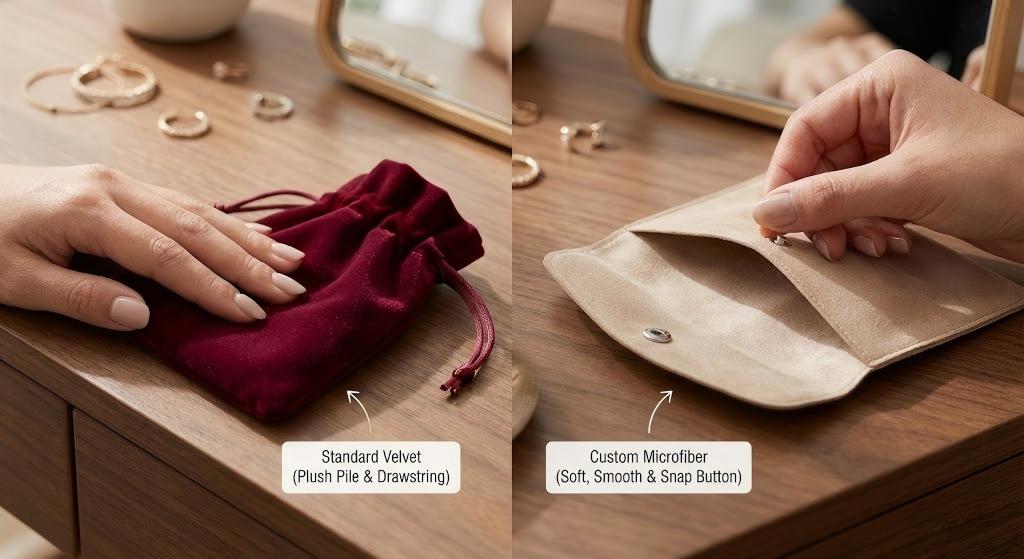
2. Standard Velvet: Material Composition, Appearance & Texture, Performance Characteristics.
Standard Velvet: covers a variety of fabrics made from natural fibers (e.g., cotton velvet, wool velvet), man-made fibers (e.g., polyester velvet, nylon velvet) or blended fibers, with a velvety surface structure formed through textile weaving processes.
The pile length and density vary depending on the material. Natural velvet (e.g., cashmere velvet) delivers a soft and gentle texture, while man-made velvet (e.g., coral velvet) may feel relatively stiff or slippery. Some velvet materials may also feature distinct textures or luster.
The commercially available velvet drawstring bag is typically produced using the 'Double-Cloth' weaving method. Two layers of fabric are woven simultaneously and then sliced apart by a reciprocating knife blade to create the pile.
A. The 'Linting' Phenomenon (Particulate Contamination)
The fundamental flaw in budget velvet is the lack of 'Pile Lock.' Because the vertical fibers are simply cut, they rely on the friction of the Weft and Warp yarns to stay in place. In low-thread-count velvet (<200 thread count), this friction is insufficient. Under the microscope, loose velvet fibers (particulates) ranging from 100 to 500 microns detach easily. For high-value jewelry with intricate prong settings, these fibers become lodged between the stone and the metal. This creates a 'Negative Unboxing Event,' forcing the customer to perform manual cleaning immediately upon receipt.
B. Triboelectric Charging (Dust Magnet)
Standard polyester velvet has a high electrical resistance, making it prone to the Triboelectric Effect. It generates static electricity through friction, effectively becoming a magnet for atmospheric dust. A black velvet pouch stored for 6 months will often look grey due to accumulated dust, requiring additional time to clean before shipping.
In addition, natural velvet is relatively costly. For maintenance, it should avoid contact with water and direct sunlight, and any stains require professional cleaning
3. Custom Microfiber: Material Composition, Appearance & Texture, Performance Characteristics.
The shift towards microfiber jewelry pouch wholesale represents a transition from mechanical weaving to chemical extrusion. A synthetic material made from ultra-fine fibers (≤10μm diameter) via weaving, coating, and napping, mimicking genuine leather texture.
It has uniform dense piles, regular texture, no natural pores, soft smooth touch and mostly matte/semi-matte luster.
A: Denier per Filament (DPF) Analysis
Standard textile fibers are 1-5 Denier. Microfiber is defined as having a DPF of < 1.0. High-quality jewelry pouches use 'Ultra-Microfiber' with a DPF of 0.05. This is achieved via the 'Island-in-the-Sea' process, where 37 or more nylon 'islands' are embedded in a polyester 'sea' and then chemically split.
The result is a surface density 50x higher than velvet. This ultra-dense structure mimics the collagen fiber network of natural leather, which is why it is often technically referred to as a suede jewelry pouch.
B: Stain Resistance, Wear Resistance & Easy Maintenance
It boasts excellent wear resistance, dirt resistance, and water resistance, along with strong scratch resistance. It is not prone to pilling or damage, and its stain resistance can be further enhanced via post-treatment processes. In addition, it is moderately priced and easy to maintain: it can be wiped with a damp cloth or treated with a dedicated cleaner, and some microfiber variants are washable.
4. What Are the Aesthetic Differences Between Standard Velvet and Custom Microfiber?
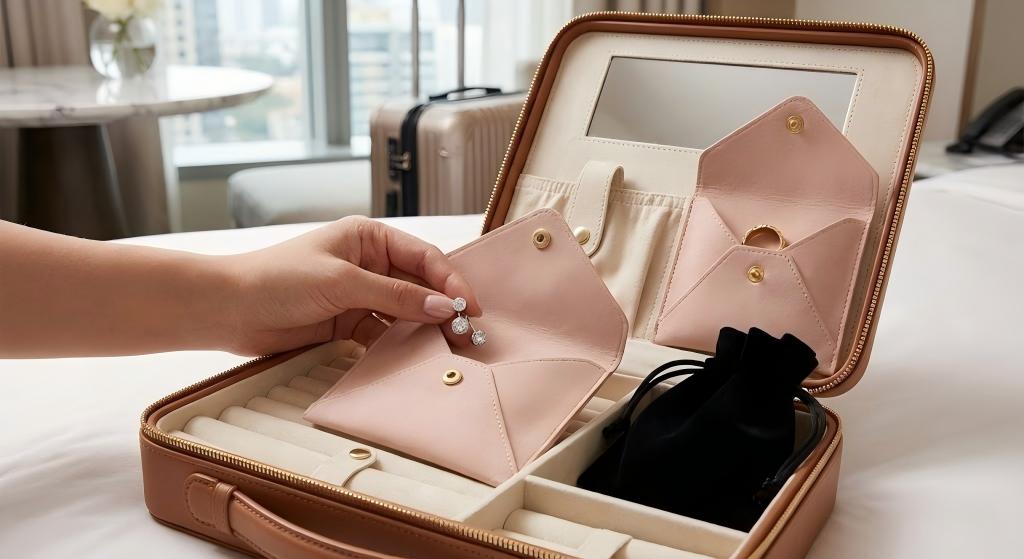
A: Color Presentation
• Standard Velvet: Generally features low color saturation. Natural velvet tends to have subtle variegations, while man-made velvet has average color uniformity. It boasts a soft matte luster; some types show a hazy finish due to uneven pile density, exuding a retro and gentle visual vibe.
• Custom Microfiber: Can accurately achieve various color tones (both high and low saturation) with uniform color and no variegations. Its luster is highly controllable — it can be crafted into a delicate matte finish, a subtle soft sheen, or even a pearlescent texture, presenting a more refined and consistent visual effect.
B: Surface Texture & Finish
• Standard Velvet: Texture varies greatly by material. Natural velvet has fluffy, irregularly arranged piles with a natural tactile texture; man-made velvet has relatively regular piles but some with obvious pile textures, showing a single visual layer and a common, mass-market look.
• Custom Microfiber: Features a smooth, delicate surface with fine, tightly and evenly arranged piles and no messy textures, presenting a neat and clean visual effect. It can be customized with subtle textures to fit minimalist, light luxury, high-end, and other brand styles, delivering a more premium and unique texture.
C: Visual Adaptability
• Standard Velvet: Shows a retro, gentle style, suitable for traditional jewelry, Chinese-style jewelry, or affordable jewelry categories. It has strong visual affinity but fails to highlight the premium texture of jewelry, and is prone to homogeneity with the packaging of similar brands.
• Custom Microfiber: Boasts versatile styles and high plasticity — minimalist style for sleekness, light luxury style for refinement, and high-end style for sophistication, which can accurately match the brand’s own temperament. Visually elegant and understated, it highlights the luster and texture of the jewelry itself, helping brands create exclusive visual identities.
5. Chemical Engineering: The Kinetics of Tarnish
The nemesis of silver inventory is Tarnish—chemically known as Silver Sulfide ($Ag_2S$). The reaction rate is defined by:
$$ 2Ag + H_2S + \frac{1}{2}O_2 \rightarrow Ag_2S + H_2O $$
A. The Sulfur Problem in Velvet
Cheap black velvet dyes often utilize Sulfur Black B (CI Sulphur Black 1). Under humid conditions, these dyes hydrolyze to release Hydrogen Sulfide ($H_2S$) gas. Placing a silver ring in a sulfur-dyed velvet bag is essentially placing it in a reaction chamber. Brands often lose 3-5% of inventory value to 'dead stock' that requires professional re-polishing.
B. The Microfiber Advantage
Engineered Microfiber uses Disperse Dyes (for the PET component) and Acid Dyes (for the Nylon component) that are high-energy fixed. These dyes are chemically stable and pH neutral (pH 6.5-7.5). Furthermore, the dense structure of the microfiber acts as a gas barrier, reducing the airflow velocity around the jewelry, thereby lowering the supply of oxygen ($O_2$) required for the tarnish reaction.
6. Branding Thermodynamics: Debossing vs. Ink
The longevity of a logo depends on the interaction between the substrate and the marking method.
• Velvet (Screen Printing Failure): Ink relies on surface tension to bond. On velvet, the uneven pile prevents a continuous film formation. Over time, the ink cracks due to mechanical flexion. It is an adhesive bond, which is the weakest link.
• Microfiber (Thermodynamic Debossing): Microfiber is thermoplastic. When a logo is Hot Stamped at $130^\circ C$ with high pressure (300 PSI), the fibers undergo a glass transition phase. They are permanently compressed and fused. The logo becomes a topographic feature of the material—indelible, sharp, and adding a sophisticated 'tone-on-tone' shadow effect that ink cannot replicate.
7. Standard Velvet vs. Microfiber: Key Differences in Application Scenarios
A. Brand Positioning & Target Audience Fit
• Standard Velvet: Suitable for mid-to-low-end jewelry brands, affordable fast-fashion jewelry, traditional Chinese-style jewelry, and brands targeting mass consumers or entry-level jewelry buyers. It caters to groups pursuing cost-effectiveness, favoring a retro and gentle style, with moderate requirements for packaging texture, but cannot support the premium positioning of high-end brands.
• Custom Microfiber: Ideal for mid-to-high-end to luxury jewelry brands, designer brands, and light luxury jewelry, targeting mid-to-high-end buyers who value quality and a detailed brand experience, as well as those with high requirements for the consistency between packaging texture and brand temperament. It perfectly meets the needs of brands for high-end and differentiated positioning.
B. Jewelry Category Fit
• Standard Velvet: More suitable for mid-to-low-value jewelry such as silver jewelry, alloy accessories, affordable crystals, and small traditional Chinese jade pieces. Its retro and gentle texture echoes the temperament of traditional categories, but its limited texture ceiling fails to highlight the preciousness of high-value jewelry.
• Custom Microfiber: Compatible with all jewelry categories, especially high-value ones like diamonds, colored gemstones, high-end jadeite, K-gold jewelry, and watch-matching jewelry. Its delicate and premium texture sets off the transparency and luster of jewelry, adapts to diverse jewelry designs (minimalist, light luxury, sophisticated, etc.), and enhances the overall premium sense of products.
C. Packaging Carriers & Usage Scenarios
• Standard Velvet: Mostly used for basic jewelry pouches, linings of affordable jewelry boxes, gift packaging, and temporary storage packaging for exhibitions. It fits scenarios of one-time delivery and low-cost bulk procurement, not suitable for long-term high-frequency use (prone to deformation and wear), nor can it meet the customized display needs of brands.
• Custom Microfiber: Applied to high-end jewelry pouches, custom jewelry boxes (both inner and outer layers), counter display props, gift box matching packaging, and member-exclusive packaging. It is suitable for brand counter display, high-end gift box delivery, long-term storage, brand image display, etc. It supports customized design, maintains stable texture for a long time, and can also be used for display decoration in jewelry stores to upgrade the overall store grade.
D. Channel & Delivery Scenarios
• Standard Velvet: Adapted to channels such as online affordable e-commerce, wholesale market supply, and offline ordinary accessory stores. It mainly meets the basic demand of "low cost and storage function" without empowering brand-added value.
• Custom Microfiber: Suitable for high-end counters, official brand direct sales, private domain high-end customer delivery, and luxury multi-brand stores. It can transmit brand value through packaging texture, help brands establish a differentiated image in high-end channels, and improve customer repurchase intention and brand loyalty.
8. FAQ: Advanced Technical Sourcing Questions
Q1: What is the optimal GSM (Grams per Square Meter) for high-end microfiber pouches?
A: We engineer our pouches between 280gsm and 350gsm. Below 250gsm, the material lacks the 'memory foam' effect needed to cushion impacts. Above 400gsm, the pouch becomes too stiff to fold elegantly.
Q2: How does the closure mechanism impact longevity (Snap Button vs. Drawstring)?
A: Drawstrings rely on friction, which degrades as the satin ribbon wears out. Our Microfiber pouches utilize brass-core Snap Buttons (tested for 5,000 cycles). This provides a mechanical 'positive lock' that ensures the jewelry never accidentally falls out.
Q3: Can microfiber pouches be washed by the end-consumer?
A: Yes. Microfiber is hydro-stable. It can be machine-washed at 40°C without losing its dimensional stability or pile direction. Velvet, conversely, suffers from 'pile crushing' when wet, permanently ruining the aesthetic.
Q4: Is Hot Stamping (Foil) possible on Microfiber?
A: Absolutely. While debossing (blind press) is popular for a subtle look, Gold or Silver Foil stamping works exceptionally well on microfiber due to its flat surface profile. The foil bonds directly to the fused fibers, offering high reflectivity.
Q5: Is Microfiber eco-friendly compared to Cotton Velvet?
A: While cotton is natural, standard cotton velvet uses massive amounts of water and pesticides. We offer Recycled Microfiber (rPET) options made from post-consumer plastic bottles. This circular economy approach appeals to the modern sustainable consumer.
Q6: Does Microfiber offer better scratch protection for Pearls?
A: Yes. Pearls are soft (Mohs hardness 2.5). The abrasive dust trapped in velvet can micro-scratch the nacre of a pearl. Microfiber's lint-free and dust-repelling properties make it the only recommended soft packaging for organic gemstones.
9. Conclusion:
The transition from velvet to microfiber is a transition from commodity sourcing to engineering sourcing. As a premier jewelry packaging manufacturer, we advise brands to audit their packaging not just for price, but for chemical inertness and mechanical longevity.
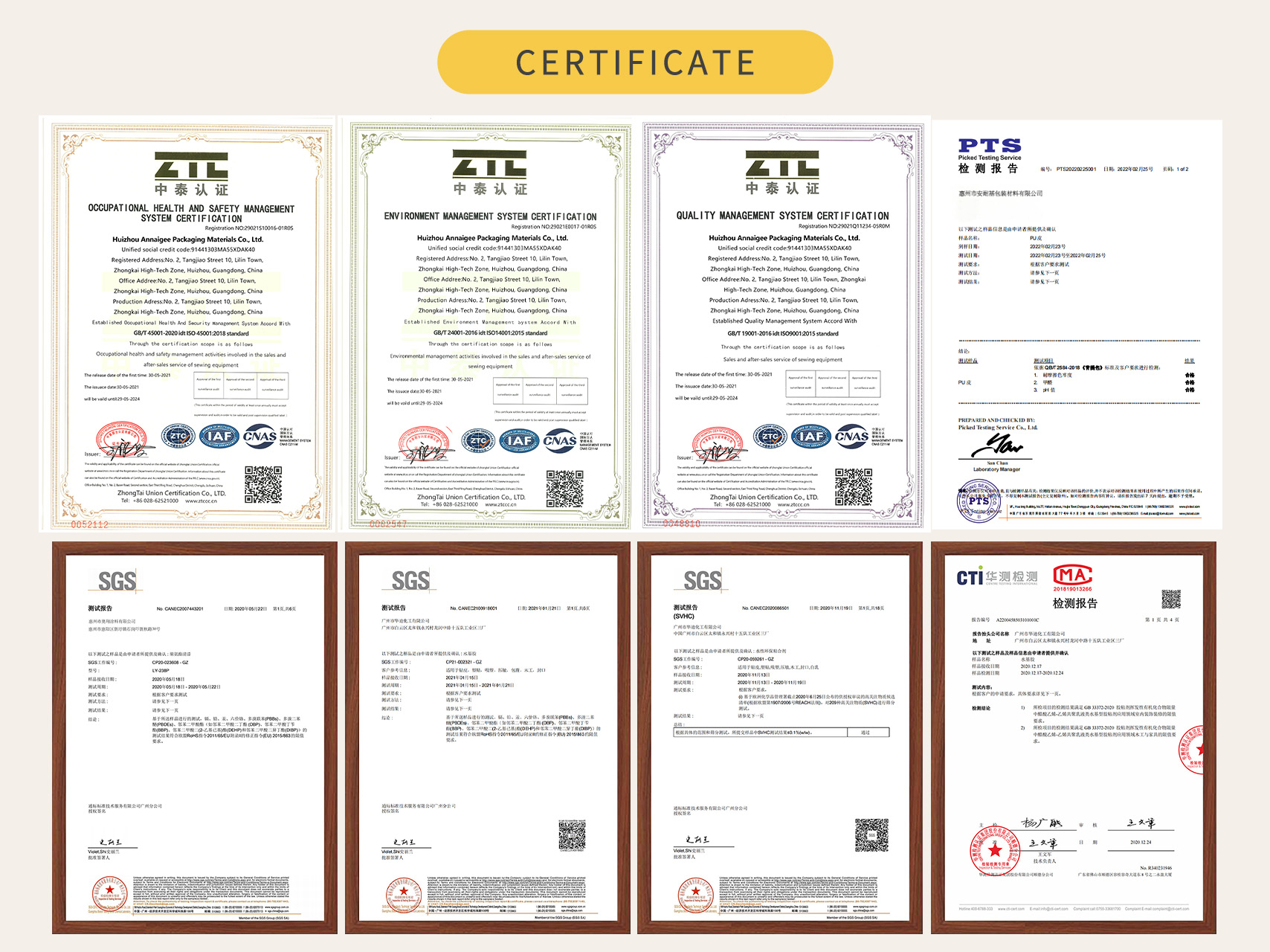
We invite you to consider partnering with Annaigee Jewelry Packaging Company. As a seasoned enterprise with nearly 30 years of experience in the brand packaging sector, we will provide you with professional design and manufacturing recommendations. Our custom packaging solutions will accurately meet your brand’s aesthetic requirements and help boost your brand value continuously.

Quick links
Products
Contact us
Contact: Veronica Chang
Contact number: +86 15622157335
Email address: veronicazhang@aliyun.com
WhatsApp: + 86 15622157335
Address: No.2, Tangjiao Tenth Street, Lilin Town, Zhongkai High-Tech Zone, Guangdong, China
We are confident to say that our customization service is outsatnding.