


Stock Packaging vs. Custom Jewelry Packaging: A Technical & Supply Chain Article
1. Customized Packaging is the Cost-Effective Lever for Brands to Boost Added Value.
In today’s profit-driven business world, luxury goods and high-end consumer products are in greater need of leveraging practical tools such as packaging, display props, and window displays to elevate brand image, boost brand visibility, and deepen brand influence.
However, for the supply chain director or the procurement engineer, the selection of a custom jewelry box manufacturer is not merely an aesthetic decision—it is a rigorous exercise in operations research and material science.
The dichotomy between Stock Packaging (Off-the-shelf) and Custom Mold Packaging represents a fundamental trade-off between supply chain agility and brand asset control.
While stock solutions offer the allure of low Minimum Order Quantities (MOQ) and immediate 'Just-in-Time' (JIT) delivery, they frequently suffer from structural genericism that compromises the 'Unboxing Experience'—a metric now directly correlated with Customer Lifetime Value (CLV).
This article deconstructs the physical and financial architecture of these two pathways. We move beyond superficial price comparisons to analyze the Total Cost of Ownership (TCO), examining how mold amortization, volumetric logistics weight, and manufacturing tolerances impact the bottom line of a jewelry enterprise.
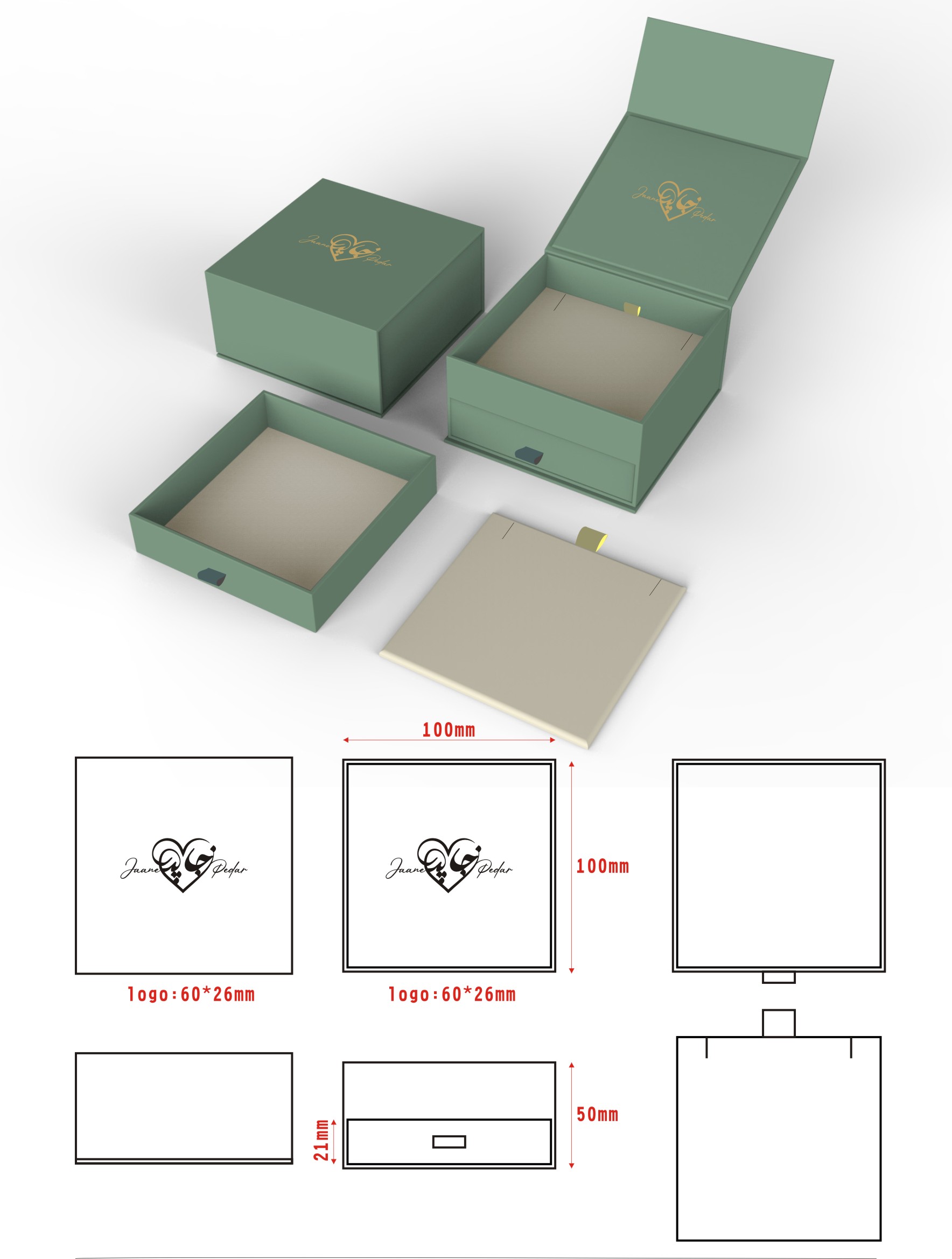
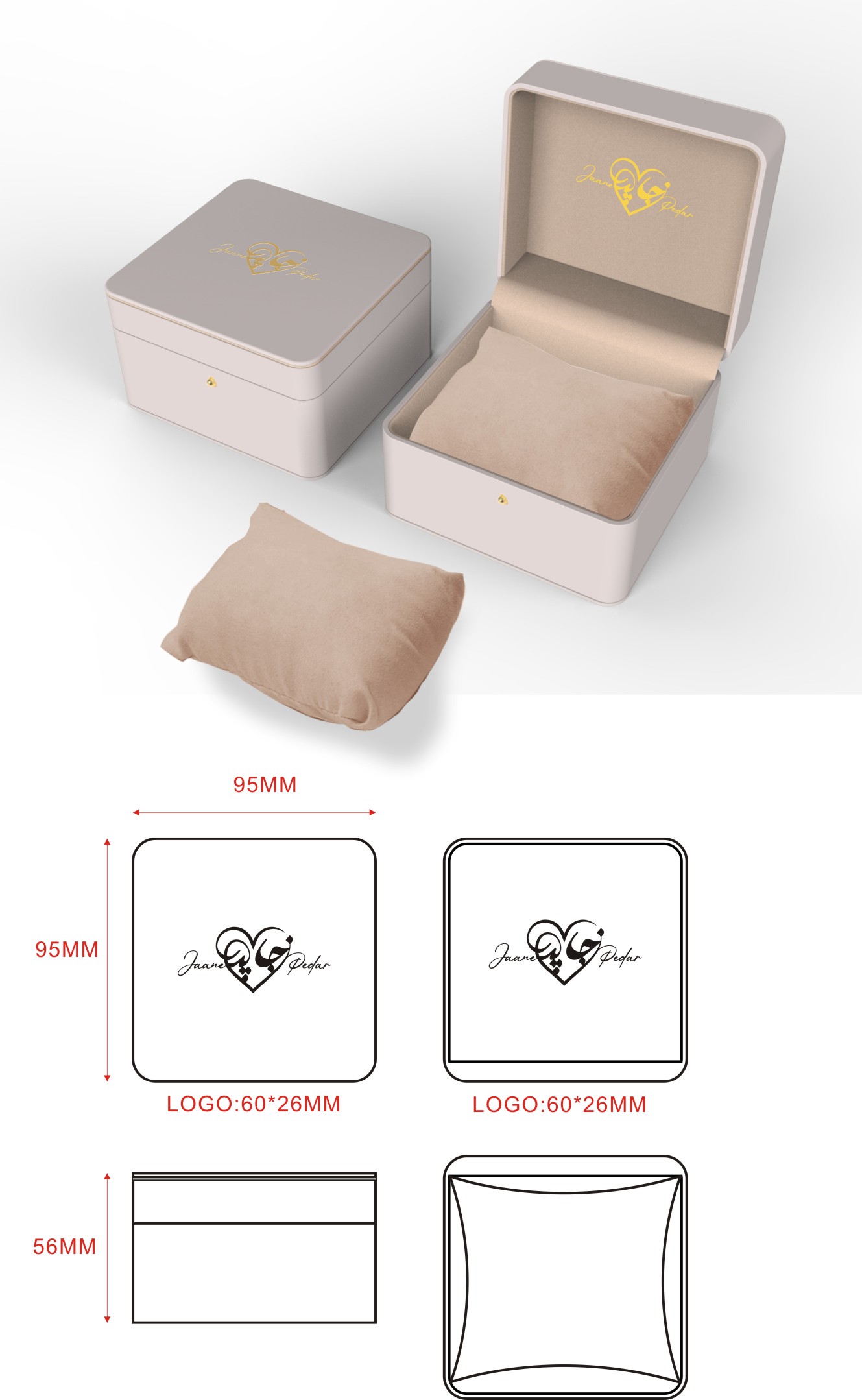
2. Material Physics: From material properties and structural design
From the perspectives of material properties and structural design, the primary mission of packaging is to provide 100% absolute protection for products.
First of all, it must withstand various external forces throughout the transportation process. Whether subjected to compression, vibration (measured by gravity) or impact, the packaging’s structural stability and soft lining can fully buffer external forces and avoid any damage to the product.
In addition, the packaging itself must be free of any harmful substances to prevent any harm to the product and end users. Take silver jewelry as an example: if the sulfide content in the packaging box exceeds the standard, long-term contact between silver products and the packaging will trigger a chemical reaction between sulfide and silver, resulting in black spots or overall tarnishing on the silver surface, which will seriously affect the product’s appearance.
A. The Structural Limitations of Ready-made Jewelry Packaging
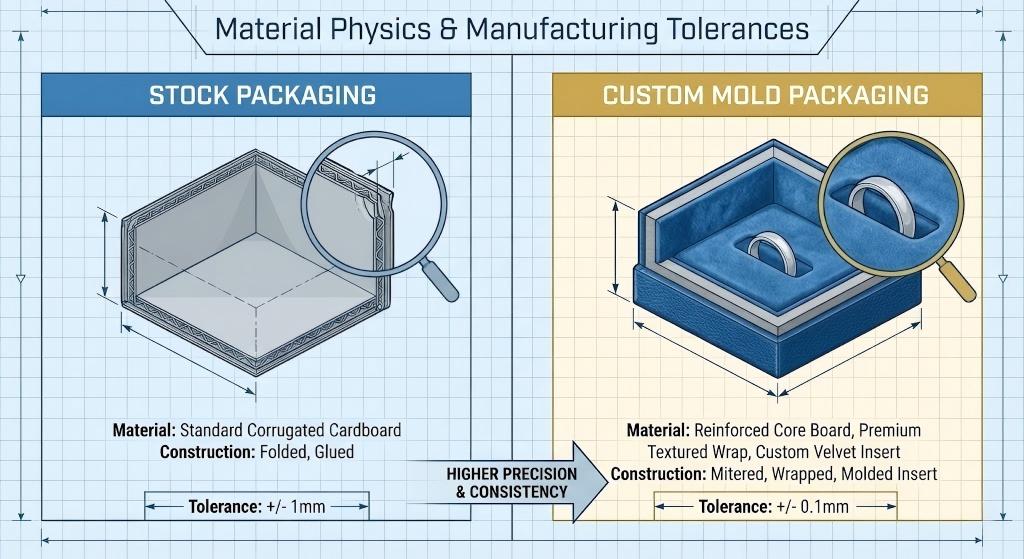
Generic stock packaging typically relies on a cardboard core wrapped in art paper, paired with a low-density Polyurethane (PU) sponge insert. From a physics standpoint, this combination presents several vulnerabilities:
1. Low Compression Modulus: PU sponge (Density ~25kg/m³) has a weak cellular structure. When a heavy object, such as a solid gold curb chain (>50g), is placed on it, the foam undergoes 'Creep Deformation.' Over a storage period of 90 days, the foam may lose up to 30% of its rebound resilience, leading to the jewelry rattling inside the box.
2. Hygroscopic Expansion: Cardboard cores are highly hygroscopic. In ocean freight scenarios where relative humidity (RH) inside a container fluctuates between 40% and 90%, cardboard can absorb moisture, leading to warping or 'bloating.' This compromises the structural integrity of the hinge mechanism.
B. The Viscoelastic Advantages of Custom Jewelry Packaging
Custom engineering allows for the use of injection-molded ABS (Acrylonitrile Butadiene Styrene) or High-Impact Polystyrene (HIPS) as the core substrate. These polymers offer:
1. Dimensional Stability: ABS maintains its shape definition within a tolerance of ±0.05mm, unaffected by humidity. This ensures that the lid and base align perfectly, creating the coveted 'air-suction' resistance upon opening.
2. Insert Engineering (EVA vs. Flocking): Custom molds utilize Ethylene-Vinyl Acetate (EVA) inserts with densities ranging from 45 to 80 Shore A hardness. Through CNC profiling, engineers create an 'Interference Fit'—a cavity slightly smaller than the jewelry piece. This friction fit creates a static holding force that prevents movement even under the 3G vibration standards of ASTM D4169.
ENGINEERING INSIGHT: The Coefficient of Friction (COF) between Microfiber and Gold is approximately 0.4-0.5, compared to 0.2 for standard Velvet. Custom microfiber linings significantly reduce the risk of jewelry slipping during transit.
3. Logistics Engineering: The Hidden Profit Center
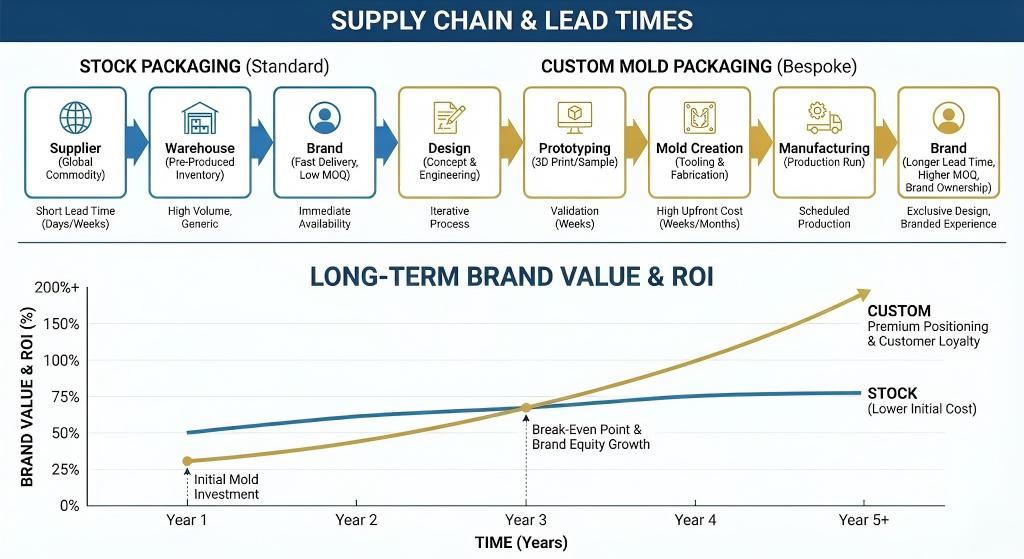
Novice buyers focus on the Unit Price (Ex-Works). Expert buyers analyze the Total Landed Cost. The relationship between mold cost vs unit price is the lever for profitability.
A. Volumetric Weight Optimization (The Cube Rule)
Air freight is charged on the greater of Actual Weight or Volumetric Weight (L x W x H / 5000). Stock boxes are designed to be 'one-size-fits-all,' which inherently means they are 'oversized-for-most.'
Hypothetical Calculation:
• Stock Box: 10cm x 10cm x 5cm = 500 cm³ volume.
• Custom Optimized Box: 8cm x 8cm x 3.5cm = 224 cm³ volume.
• Result: A 55% reduction in shipping volume. If air freight is $8/kg, the logistics saving per unit often exceeds $0.50—frequently higher than the amortization cost of the mold itself.
B. The Break-Even Point (BEP) Formula
$$ BEP = \frac{Tooling Cost}{(Stock Price + Stock Freight) - (Custom Price + Custom Freight)} $$
When factoring in the logistics savings calculated above, the ROI on a $3,000 mold is often realized within the first 3,000 to 5,000 units. For a brand shipping 20,000 units annually, custom molding is statistically the only viable financial option.
4. Sustainability Engineering: Beyond Cost Driver.
Modern custom molding allows for the integration of PCR (Post-Consumer Recycled) ABS. By specifying a 30% to 50% PCR blend, brands can reduce their carbon footprint without sacrificing the tensile strength of the box.
Furthermore, because custom boxes are smaller (optimized volume), they reduce the carbon emissions associated with transport.
A smaller jewelry box means more units per pallet, fewer containers per year, and a lower Scope 3 GHG emission rating for the brand.
5. FAQ: Technical Decisions for the CTO
Q1: How does the VDI 3400 texture standard apply to jewelry boxes?
A: The VDI 3400 scale defines the surface roughness of the mold. For a 'Soft Touch' paint application, we recommend a VDI 24 to 27 texture on the raw plastic. This provides the necessary mechanical adhesion (tooth) for the paint to bond, passing the Cross-Cut Tape Test (ASTM D3359) without peeling.
Q2: Can we achieve sharp 90-degree corners with paper boxes?
A: Yes, via 'V-Grooving' machines that remove material from the greyboard before folding. However, this weakens the structural corner integrity. An injection-molded custom box achieves sharp visual corners while maintaining maximum structural rigidity due to solid wall construction.
Q3: What is the lead time impact of the T1 sample rejection?
A: If the T1 sample has sink marks or flash, the mold must go back to the CNC bench. This adds 5-7 days. Partnering with an experienced manufacturer who utilizes Mold Flow Analysis software prevents these T1 defects, ensuring the T1 sample is often the T2 approval sample.
6. Conclusion: The Convergence of Engineering and Art
In the jewelry and luxury goods industry, where aesthetic experience is highly valued, packaging stands out as the optimal lever to drive brand value and communication power at the lowest cost — a core area that all merchants must carefully cultivate and focus on polishing.
A premium unboxing experience can elevate an ordinary transaction into an emotional bond that deeply connects consumers with the brand. Nowadays, more and more merchants have quietly transformed their mindset: they no longer regard jewelry and watch packaging merely as generic logistics carriers, but as key vehicles for creating an immersive brand experience. This transformation calls for the full support of a professional custom packaging manufacturer.
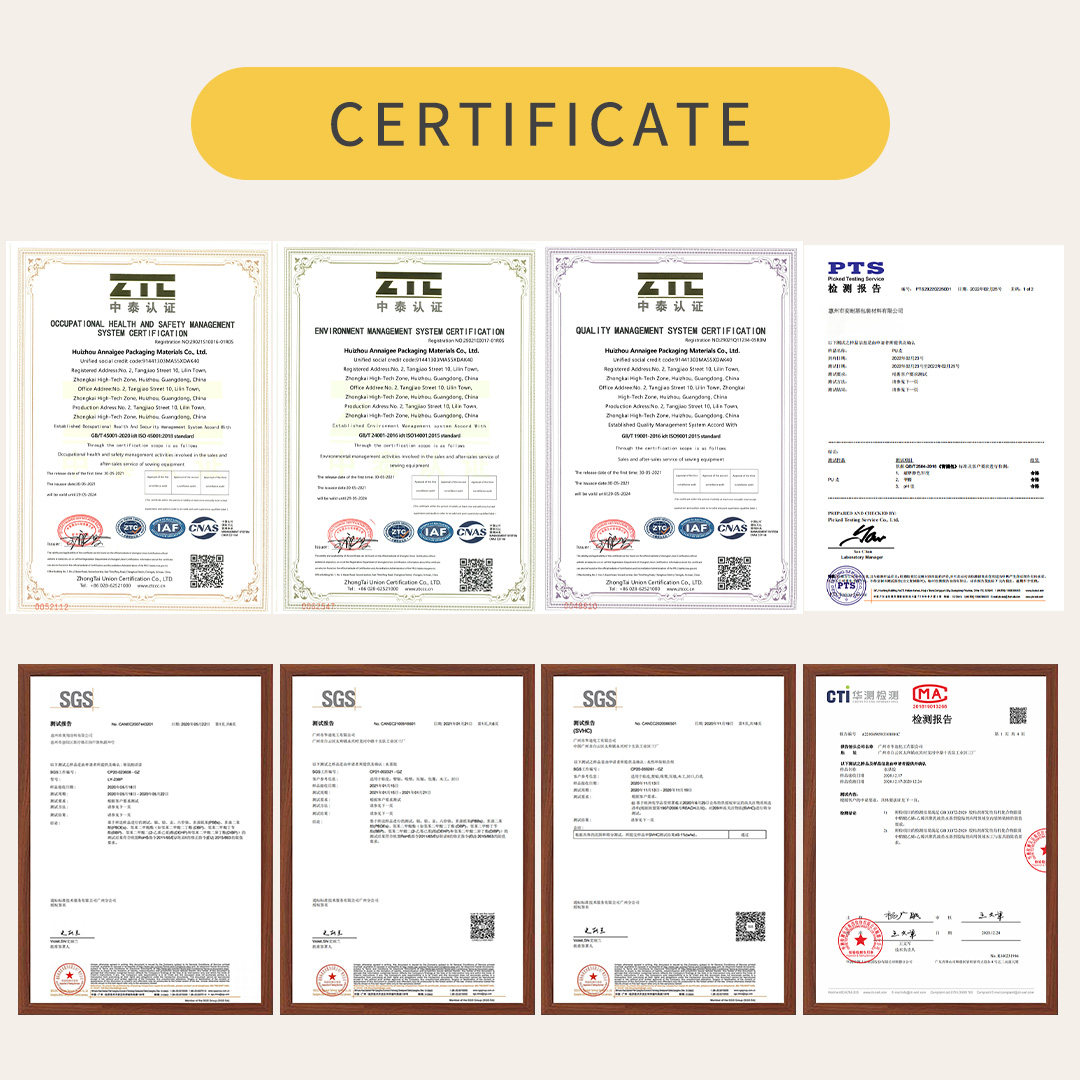
We invite you to consider partnering with Annaigee Jewelry Packaging Company. As a seasoned enterprise with nearly 30 years of experience in the brand packaging sector, we will provide you with professional design and manufacturing recommendations. Our custom packaging solutions will accurately meet your brand’s aesthetic requirements and help boost your brand value continuously.

Quick links
Products
Contact us
Contact: Veronica Chang
Contact number: +86 15622157335
Email address: veronicazhang@aliyun.com
WhatsApp: + 86 15622157335
Address: No.2, Tangjiao Tenth Street, Lilin Town, Zhongkai High-Tech Zone, Guangdong, China
We are confident to say that our customization service is outsatnding.