


Acrylic vs. Custom Wrapped Jewelry Displays: Creating a Cohesive Storefront
Jewelry display props are not just tools for showcasing products—they are core assets for boosting sales, enhancing brand value, and building customer trust.
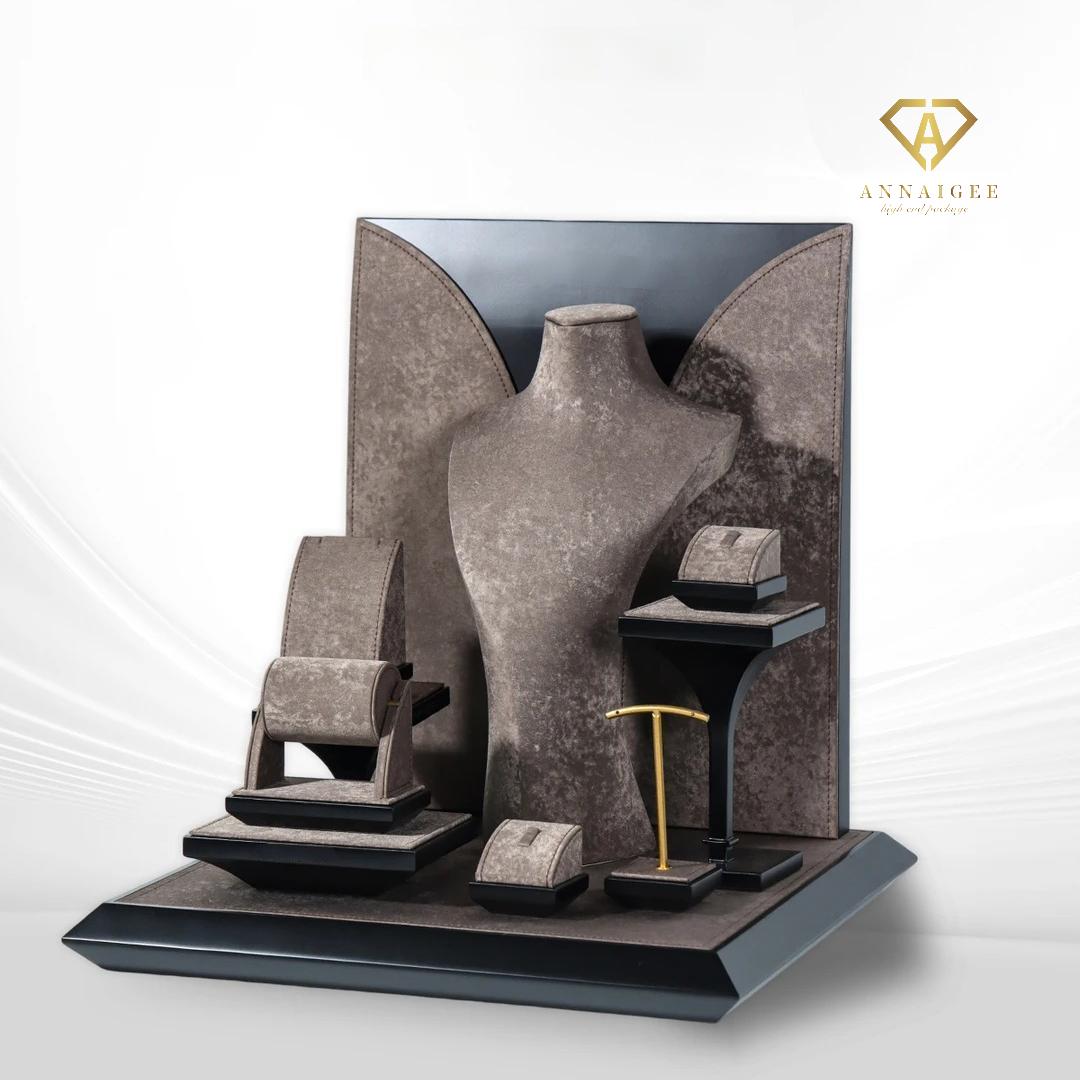
There are many types of jewelry display props, including jewelry windows, ring holders, mannequin busts for necklaces, and ankle chain display stands. For jewelry stores, these props are even more important than the store decoration itself. An excellent jewelry display prop not only serves the display function but also delivers brand value, helping promote the enterprise or brand.
1. The Importance of Jewelry Display: Boost Sales & Brand Image
Jewelry display relies on different display spaces, using various props, artworks and accessories. Based on the product style positioning, it integrates culture, art, taste, fashion, personality and other elements to fully express the product’s functionality, characteristics, style or promotional themes through diverse display skills.
A. Increase Product Added Value
Jewelry display props play a crucial role in merchandising. While a piece of jewelry has its inherent value, pairing it with high-quality display props can enhance its added value and sophistication.
B. Enhance Business Credibility
Effective jewelry display helps protect business credibility and improve product trustworthiness. It allows consumers to easily access product information, deepen their impressions, create potential purchase opportunities, and build brand recognition and trust, thereby boosting brand visibility.
C. Highlight Product Advantages
A casually displayed piece of jewelry fails to showcase its high-end quality, easily being overlooked by customers. In contrast, careful display with high-grade props, combined with supporting decorations, clearly presents the jewelry’s elegant design and exquisite craftsmanship, making it more appealing to customers.
D. Elevate Brand Image
Jewelry display exerts a key influence on purchasing decisions, as customers’ choices are partly determined by the scientific layout and visibility of store displays. Reasonable product placement, smooth display structure, and attractive decorative elements create a comfortable and aesthetic shopping environment, enhancing brand awareness, deepening brand impression, spreading corporate culture, and strengthening brand loyalty.
E. Create Brand Atmosphere
The overall atmosphere of a store includes window decoration, merchandise arrangement, lighting, color matching, and POP materials. Display techniques, props and lighting are crucial to building a compelling store atmosphere. For example, some jewelry stores use couple-themed ornaments, lace and flowers to create a romantic scene, paired with soft lighting, to provide consumers with an immersive and imaginative shopping experience.
2. Jewelry Display: Visual Marketing Technique
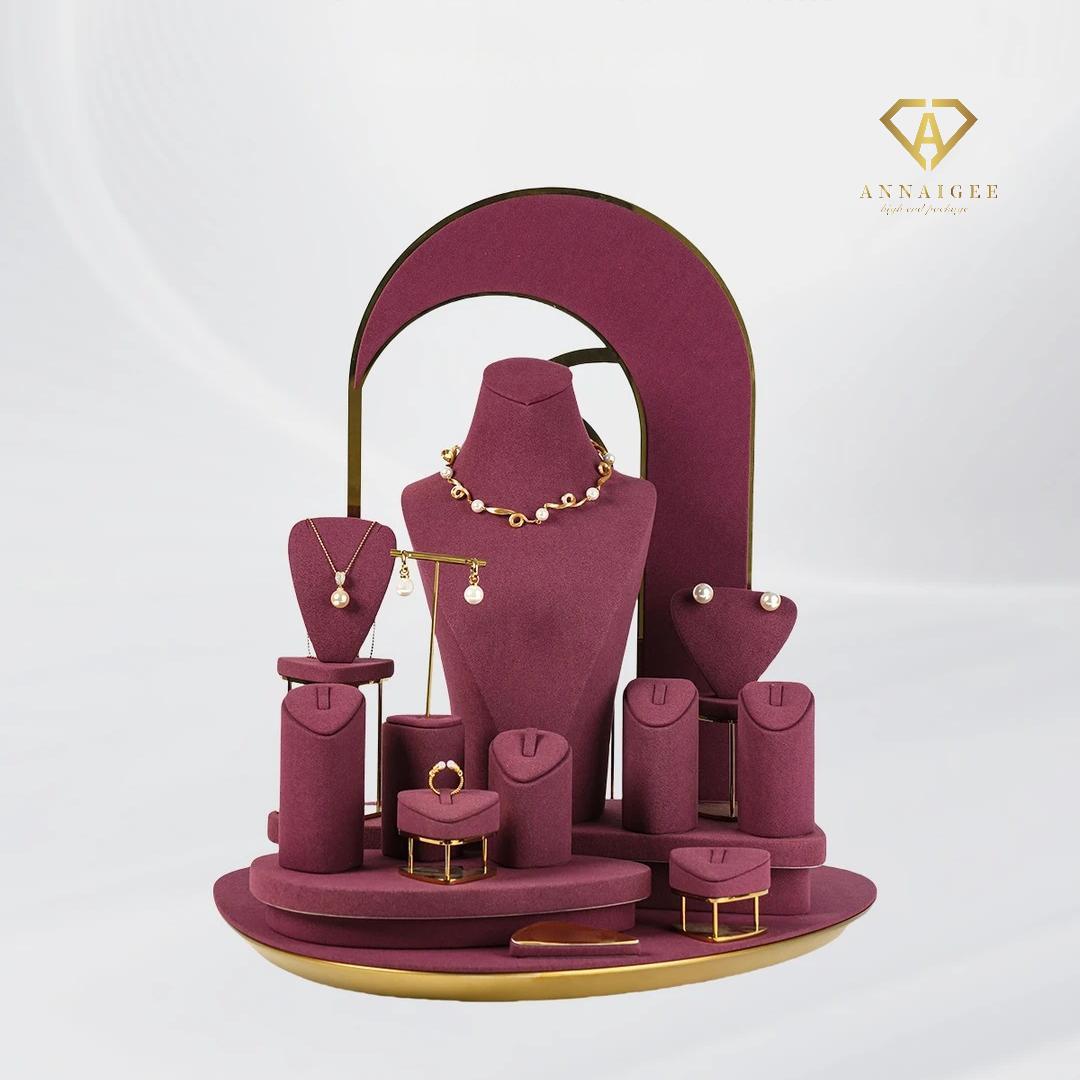
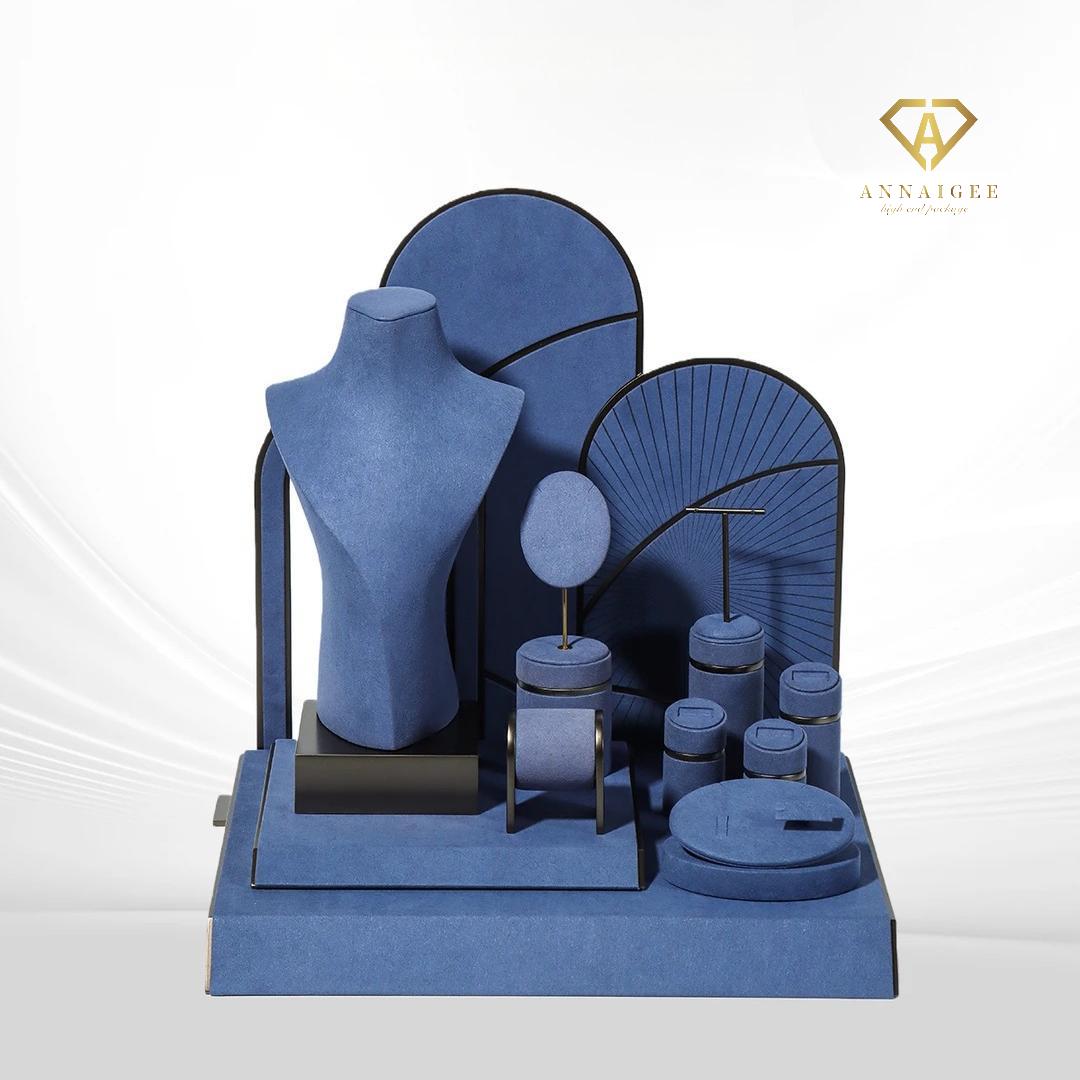
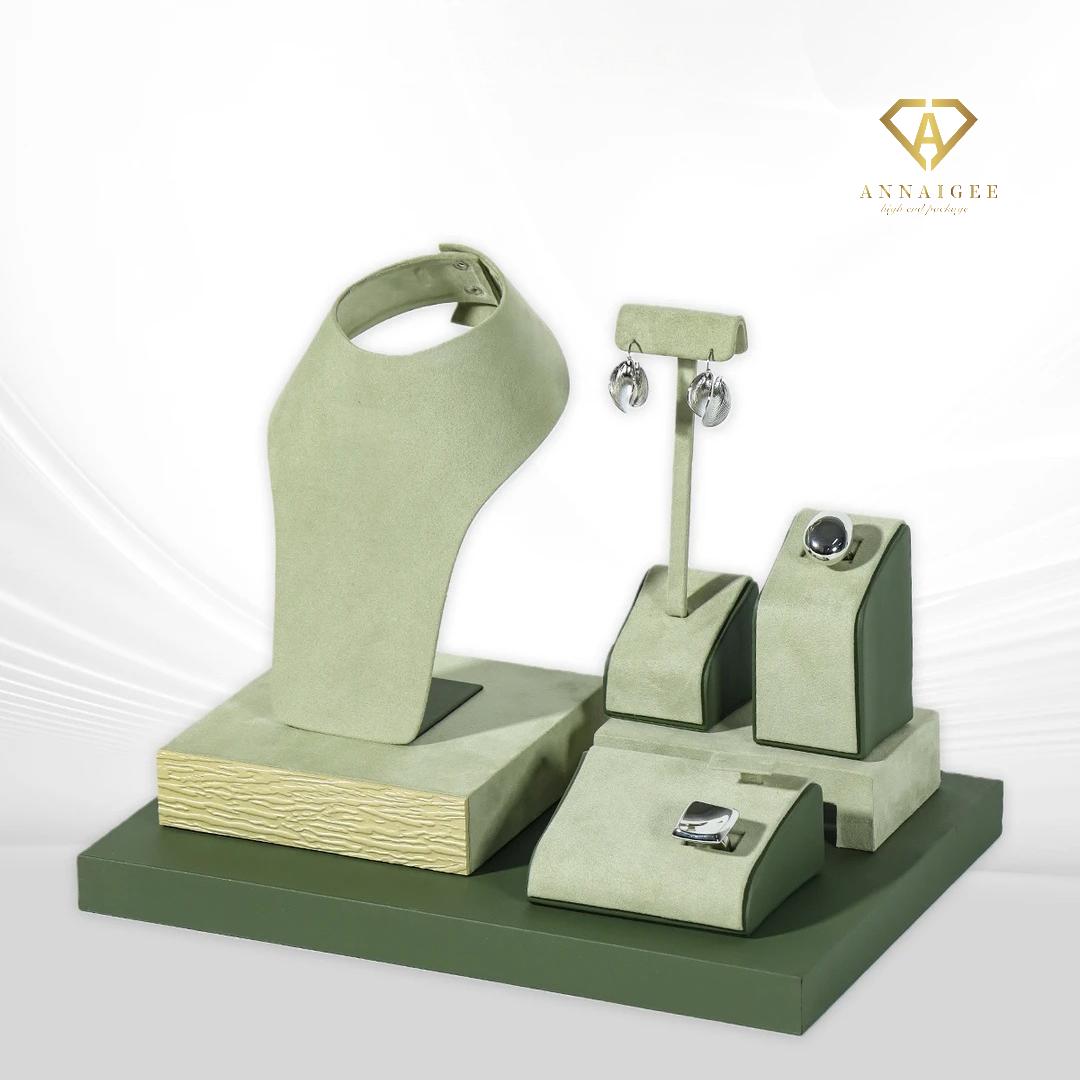
Many brands and merchants attach great importance to product display, as it is estimated that jewelry display can impact sales by over 100%. Scientific merchandise placement and display techniques can stimulate consumers’ purchasing desire and prompt them to make purchases. Statistics show that proper use of these techniques can increase sales by 10%—a significant change for both products and retail terminals.
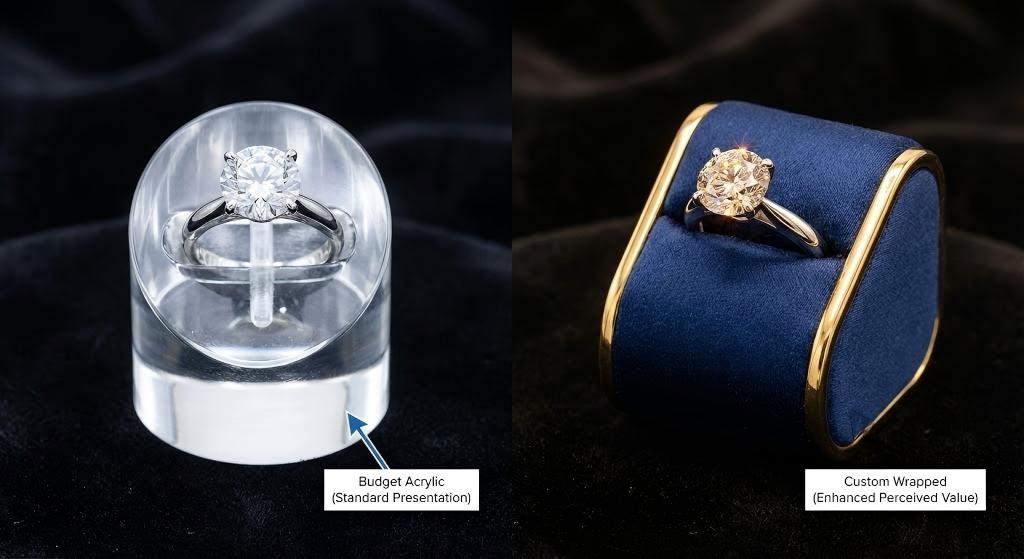
The choice between Stock Acrylic (PMMA) and Custom Wrapped Displays (Core + Cladding) is not a subjective artistic choice; it is a measurable variable that affects light refraction, perceived density, and ultimately, conversion rates.
While acrylic offers a low barrier to entry with its mass-produced availability, it introduces 'visual noise' through specular reflection and static dust accumulation. Conversely, custom wrapped displays—utilizing materials like leather, microfiber, or wood veneer—act as 'light absorbers,' directing 100% of the customer's visual attention to the jewelry's brilliance.
This article analyzes the material science, optical physics, and financial modeling behind these two substrates, providing Store Planning Directors with the technical data needed to justify CapEx investments in storefront aesthetics.
3. Acrylic: The Pathology of Polymer Degradation
Polymethyl Methacrylate (PMMA), commonly known as Acrylic, is an amorphous thermoplastic. While initially clear, its chemical structure presents significant vulnerabilities in a retail environment.
A. The Hardness Deficit & Micro-Abrasion
PMMA has a low surface hardness, rating only 3.0 on the Mohs scale (softer than a copper coin). In a busy jewelry store, displays are handled daily. The microscopic silica particles in dust, combined with the wiping motion of cleaning cloths, create a web of micro-scratches. Over a 6-month period, these scratches scatter light (Haze), reducing the transparency from 92% to <85%. This 'milky' appearance subconsciously signals 'old' or 'cheap' to the consumer.
B. Chemical Stress Cracking (Crazing)
Store staff often use alcohol-based cleaners to sanitize surfaces. PMMA is highly susceptible to solvent-induced stress cracking, known as 'Crazing.' The alcohol penetrates the polymer chains, causing them to swell and fracture under residual molding stress. This results in visible internal fissures that are impossible to repair.
C. The Triboelectric Dust Magnet
Acrylic is near the bottom of the Triboelectric Series, meaning it loves to gain electrons. In air-conditioned malls (low humidity), it generates static charges >10kV. This turns the display into a magnet for airborne particulates. A black acrylic stand will look dusty 30 minutes after cleaning, increasing the operational labor burden.
4. Custom Wrapped Displays: The Engineering of Absorption
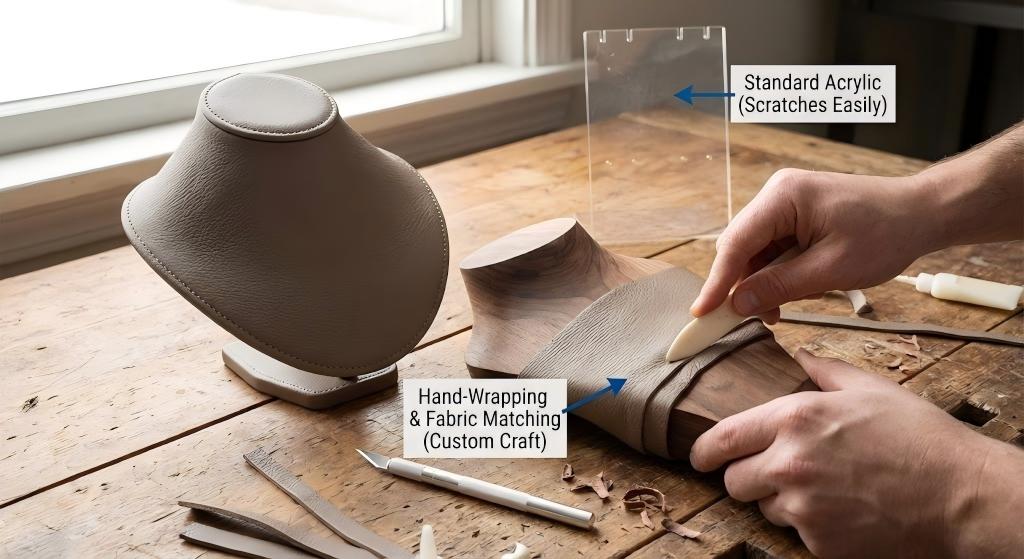
The alternative is the engineering of custom jewelry display props. This construction method involves a solid core wrapped in a premium textile. The goal is to create a background that is optically silent and tactilely substantial.
A. Core Density & Haptics
High-end busts typically utilize High-Density Fiberboard (HDF) or Cast Resin cores. HDF has a density of >800 kg/m³, compared to PMMA's 1180 kg/m³. However, because wrapped displays are solid blocks rather than thin sheets, the *perceived weight* is significantly higher. When a customer lifts a resin-core bust to examine a necklace, the mass conveys value (The Weight-Value Illusion).
B. The Skiving & Wrapping Process
Creating a seamless leather jewelry bust requires a process called 'Skiving.' The leather thickness is mechanically reduced to 0.4mm at the edges to prevent bulk. Skilled artisans then hand-wrap the core using water-based Polyurethane Dispersions (PUDs). The critical engineering metric is 'Corner Definition'—maintaining sharp geometric lines despite the added material thickness.
C. Organic Veneers
For wooden jewelry display systems, we use 0.6mm real wood veneers vacuum-pressed onto the core. This is finished with a matte lacquer (Gloss Unit < 10) to protect the wood while preventing glare.
5. Photometry & Color Engineering
The interaction between the light source, display prop, and jewelry is governed by optical physics.
A. Specular vs. Diffuse Reflection
One of the key principles in jewelry display prop design: Highlight the jewelry, which avoiding overly complex or exaggerated shapes, as well as scattered or dazzling lighting, so as not to distract customers' attention from the jewelry.
Acrylic surfaces are smooth, causing Specular Reflection (mirror-like). Under high-intensity LED track lighting, this creates 'Hot Spots' or glare that blinds the customer and competes with the jewelry's brilliance. Wrapped jewelry displays (Leather/Microfiber) have a textured surface that causes Diffuse Reflection. They scatter light, eliminating hot spots and ensuring the jewelry is the brightest object in the field of view.
B. Albedo & Contrast Ratios
Albedo is the measure of diffuse reflection of solar radiation. A white acrylic stand has a high albedo (~0.8), often washing out the sparkle of silver or white gold. A custom 'Slate Grey' or 'Midnight Blue' microfiber prop has a low albedo (~0.1), creating a high-contrast background that maximizes the scintillation (fire) of diamonds.
6. Financial Modeling: Net Present Value (NPV)
We calculate the Net Present Value (NPV) of the display investment over a 5-year lease term.
Scenario Assumptions:
• Store Size: 10 Showcases.
• Acrylic Cost: $2,000 initially. Replacement every 18 months due to degradation.
• Custom Wrapped Cost: $6,000 initially. Replacement every 60 months.
• Cleaning Labor: Acrylic requires 15 mins/day ($4,500/yr). Custom requires 2 mins/day ($600/yr).
The Calculation:
Acrylic 5-Year TCO = $2,000 + (3 x $2,000 replacements) + ($4,500 x 5 labor) = $30,500.
Custom 5-Year TCO = $6,000 + (0 replacements) + ($600 x 5 labor) = $9,000.
ENGINEERING INSIGHT: Financial Conclusion: Although the custom option has a 300% higher CapEx, its superior durability and lower maintenance result in a 70% reduction in Total Cost of Ownership over 5 years.
7. Sustainability: End-of-Life (EOL) Analysis
PMMA is a petroleum-based plastic. While technically recyclable, most acrylic displays end up in landfills where they take >500 years to decompose, shedding microplastics. Custom wrapped displays utilizing MDF cores and natural veneers are biodegradable (if using vegan glues) or can be repurposed. For brands with strict ESG (Environmental, Social, and Governance) goals, transitioning away from mass plastics to wood/fiber composites is a critical compliance step.
8. FAQ: Technical Merchandising Questions
Q1: How do we clean microfiber displays without damaging them?
A: Use a lint roller for dust and a lightly damp microfiber cloth with mild soap for stains. Never use alcohol-based cleaners (which are common for acrylic), as they can degrade the dye fixation in the fabric.
Q2: Does LED lighting degrade leather displays over time?
A: High-intensity UV radiation can fade leather. We recommend using 'Full Spectrum' LEDs with low UV output. Additionally, our custom leathers are treated with UV-resistant coatings to pass ISO 105-B02 (Color Fastness to Artificial Light).
Q3: Can we re-wrap the displays if we change our seasonal color palette?
A: Generally, no. The adhesive bond is permanent. However, because the *cores* are durable MDF/Resin, this is technically possible in a factory refurbishment setting, though it is usually more cost-effective to produce new sets for major re-brands.
Q4: What is the weight difference between Acrylic and Resin busts?
A: A standard neck bust in Acrylic weighs ~300g. The same volume in solid Resin weighs ~1.2kg. This weight prevents the display from tipping over when holding heavy statement necklaces, preventing potential damage to inventory.
Q5: Is 'Vegan Leather' (PU) as durable as Real Leather for displays?
A: High-grade PU (Polyurethane) is actually *more* consistent in color and grain than real leather, making it ideal for large-scale rollouts where uniformity is key. It is also more resistant to humidity fluctuations, whereas real leather can develop mold in >60% RH.
Q6: How do we prevent metal jewelry from reacting with the display glue?
A: We use pH-neutral, water-based adhesives for all wrapping. We also conduct 'Silver Tarnish Tests' on all fabric batches to ensure no sulfur off-gassing occurs from the props themselves.
Q7: What are the key design points for jewelry display props?
Match the jewelry style: The design of the props should be consistent with the style, material and theme of the displayed jewelry.
Highlight the main subject: The design of the props should focus on highlighting the jewelry. By using techniques such as contrast and foil, the jewelry can be made more eye-catching against the props.
Consider ergonomics: The height, angle and layout of the props should conform to ergonomic principles, making it convenient for customers to view and touch the jewelry.
Pay attention to color matching: The color of the props should complement the color of the jewelry to form a harmonious visual effect. Contrasting colors or harmonious colors can be used to highlight the color of the jewelry, but avoid making the color matching too dazzling or cluttered.
Material selection: The material of the props should be textured and durable, while also considering matching with the material of the jewelry.
Functionality and practicality: The design of the props should have certain functionality, such as facilitating the placement, access and replacement of jewelry. At the same time, its practicality should be considered, such as whether it is easy to clean, maintain and transport.
Innovation and uniqueness: When designing jewelry display props, innovative design concepts and techniques can be tried to make the props unique and recognizable, thereby attracting customers' attention and enhancing brand competitiveness.
9. Conclusion
We believe that by leveraging high-quality props and scientific display strategies, jewelry businesses can stand out in the market and achieve long-term development, but the cheap acrylic jewelry displays can't support this. As a professional jewelry packaging manufacturer, Annaigee understands that Jewelry display props play a crucial role in merchandising
If you’re a jewelry brand manager looking to trade generic displays for ones that embody your brand’s unique DNA, our packaging design team creates custom designs that drive conversions.

Quick links
Products
Contact us
Contact: Veronica Chang
Contact number: +86 15622157335
Email address: veronicazhang@aliyun.com
WhatsApp: + 86 15622157335
Address: No.2, Tangjiao Tenth Street, Lilin Town, Zhongkai High-Tech Zone, Guangdong, China
We are confident to say that our customization service is outsatnding.