


Standard Kraft vs. Luxury Euro Tote Bags | Premium Shopping Bags
1. Jewelry Euro Tote Bags: A Brand Asset Not to Be Neglected
For a jewelry brand, its signature custom Euro tote shopping bags are never merely a container for jewelry. It serves as an extension of brand culture, exquisite craftsmanship, and emotional connection, delivering multiple values in brand presentation, marketing, and brand communication.
Imagine customers stepping out with an elegant, brand-identified Premium Shopping Bag—every detail on the bag will capture public attention. This organic mobile promotion requires no over-investment in manpower or promotional resources, proving to be a far more cost-efficient option than other marketing initiatives for brands.
However, despite understanding the significant value of Euro Tate Bags, many brands remain largely confused about the return on investment (ROI) of these "walking billboards".
This article moves beyond the superficial 'Eco vs. Luxury' debate to perform a rigorous material science analysis. We compare the tensile strength, hygroscopic stability, and adhesive chemistry of Machine-Made Kraft bags versus Hand-Assembled Euro Totes, providing a mathematical framework for procurement decisions.
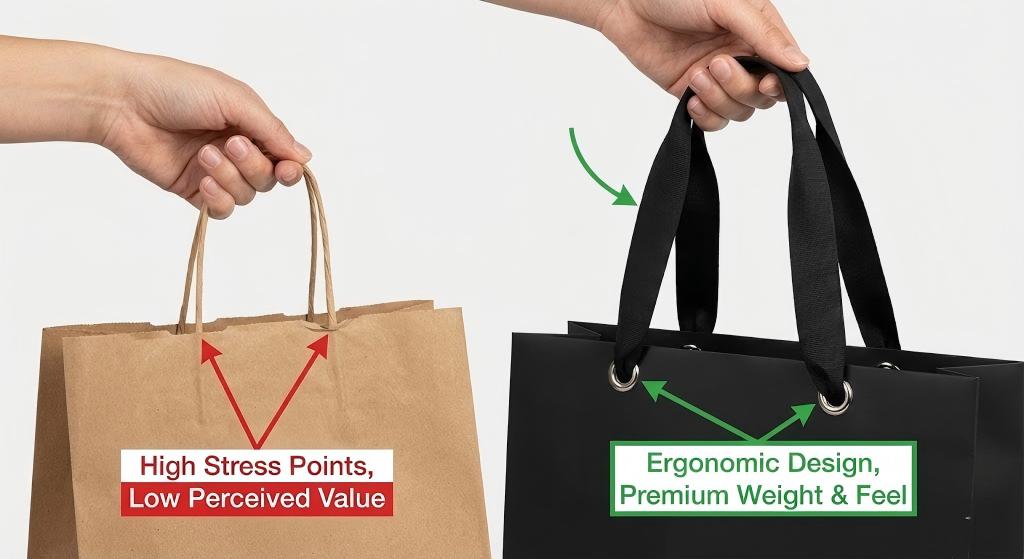
2. Standard Kraft: The Limits of Cellulose Mechanics
Kraft paper is produced via the chemical pulping of softwood chips. While cost-effective, its mechanical properties are often insufficient for the weight and sharp corners of luxury jewelry boxes.
A. Anisotropy and Tear Strength
Standard Kraft bags (100-120 GSM) exhibit significant anisotropy—meaning their strength differs based on fiber direction. While Machine Direction (MD) tensile strength is acceptable, Cross Direction (CD) tear resistance is notoriously low. According to the TAPPI T 414 Elmendorf Tear Test, a sharp corner of a ring box can propagate a tear through a Kraft sidewall with less than 400 millinewtons of force.
B. Hygroscopic Failure Modes
Cellulose is hydrophilic. In environments with >60% Relative Humidity (RH), Kraft paper absorbs atmospheric moisture via hydrogen bonding. This causes a drastic reduction in Young's Modulus (stiffness). The result is the 'Sagging Bottom' phenomenon, where the base of the bag deforms under load, ruining the geometric aesthetic essential for luxury presentation.
3. Luxury Euro Totes: The Architecture of Rigidity
The luxury paper carrier bags known as Euro Totes are not merely printed paper; they are composite laminates engineered for structural permanence.
A. The Composite Laminate Strategy
Euro Totes utilize 200-250 GSM C1S Art Paper laminated with Biaxially Oriented Polypropylene (BOPP) film. This lamination serves a dual engineering purpose:
• Hydrophobic Barrier: The BOPP film renders the substrate waterproof, ensuring the bag maintains its architectural shape even in rain or high humidity.
• Burst Strength Enhancement: The film increases the Mullen Burst Strength by >300%, effectively making the bag puncture-proof against standard jewelry box corners.
B. Reinforcement Geometry (The Internal Skeleton)
• Top Turn-Over: The top 4-5cm is folded over a 600-800 GSM cardboard strip. This creates a triple-layer anchor point for the handles, distributing shear forces across the entire width of the bag.
• Bottom Board Dynamics: A rigid greyboard insert is glued to the base. This eliminates point-loading, ensuring the bag remains a perfect rectangle, projecting an image of order and precision.
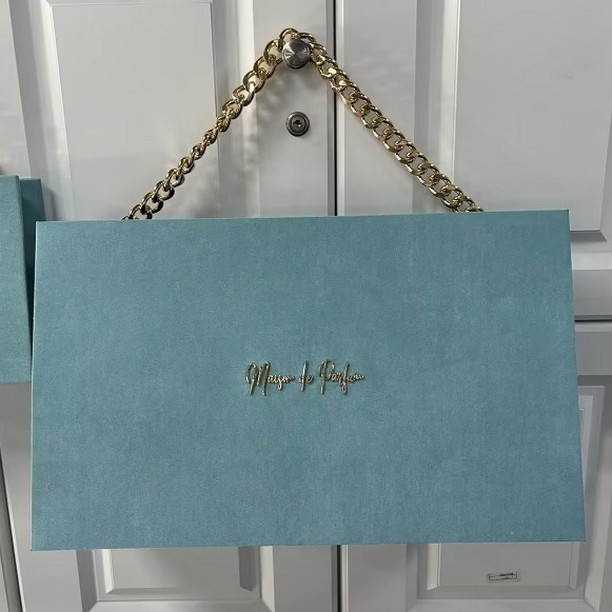
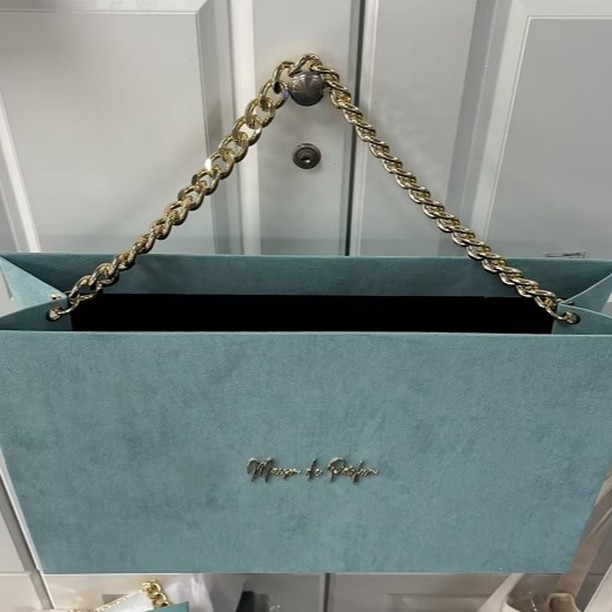
4. Key Differences in Handles Between Euro Tote Bags and Shopping Bags
First, clarify the core positioning:
ØCustom Euro tote bags focus on daily commuting, stylish matching, and long-term use, balancing aesthetics and practicality;
ØJewelry shopping bags are mainly for temporary shopping storage, prioritizing cost-effectiveness and high practicality.
The differences in handle design between the two are based on their own positioning, with specific distinctions as follows:
A. Material & Texture
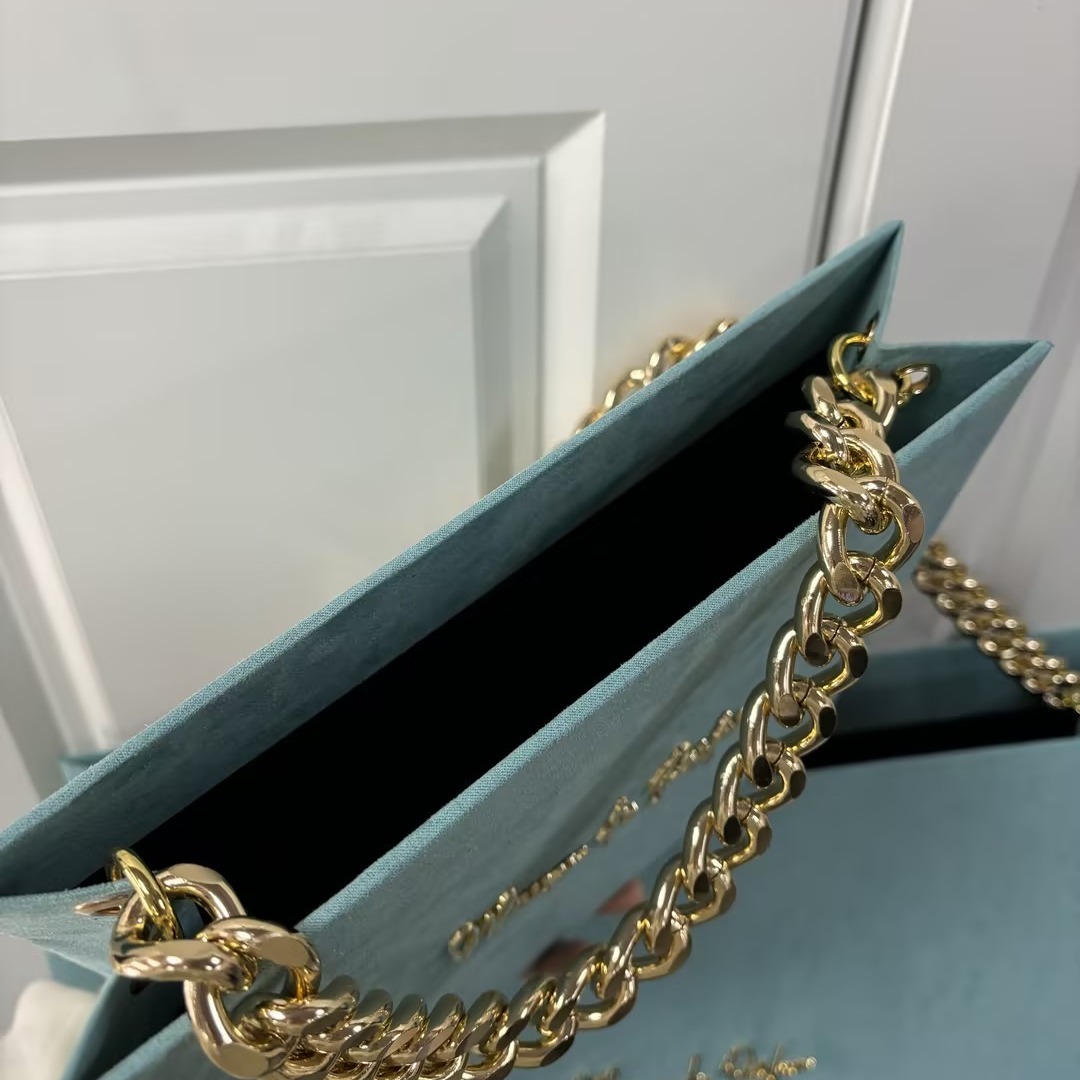
Euro tote bags: The core of handle material selection lies in texture presentation and durability. Common materials include top-grain leather, high-density wear-resistant fabric and metal fittings. High-end styles adopt specially treated top-grain leather (e.g., waxed leather, suede leather) or coated composite materials. These materials not only ensure a delicate and comfortable hand feel but also enhance the overall high-end texture of the bag, suitable for long-term and frequent use scenarios.
Shopping bags: Handle materials prioritize practicality and cost control. Mainstream options are thick kraft paper, non-woven fabric, and lightweight plastic. Only a few high-end shopping bags are equipped with leather or fabric handles, but the core still focuses on functionality. Material selection tends to be low-cost and easy for mass production, just meeting temporary carrying needs without excessive pursuit of texture performance.
B. Structure & Design
Euro tote bags: Handle design emphasizes overall coordination with the bag body, long-term use stability, and scenario flexibility. Reinforced stitching, metal fasteners and thickened connection layers are adopted to strengthen firmness and avoid deformation under long-term load. Some styles are designed with adjustable or detachable handles, compatible with multiple carrying methods like hand-holding and shoulder-carrying, improving use flexibility and forming a unified aesthetic with the bag body style.
Shopping bags: Handle design centers on meeting basic carrying needs, featuring simplicity and directness. Most have fixed lengths, with connection methods mainly including simple pasting, nailing or die-cut integrated molding. Only some styles requiring load-bearing capacity will enhance bearing capacity by adding hard cardboard reinforcement and thickening die-cut edges, without complicated processes. Structural design takes simplicity and easy production as the primary principles.
C. Size & Proportion
Euro tote bags: Handle size is strictly matched with the bag body and ergonomically friendly, focusing on improving holding comfort for daily frequent use. The width and length of the handle are adjusted according to the bag capacity: small-capacity styles are equipped with compact and portable handles, while large-capacity tote bags are paired with wider or longer handles to distribute item weight, reduce hand pressure, and avoid fatigue during long-term carrying.
Shopping bags: Handle size is designed based on shopping scenarios and conventional capacity, generally moderate for easy single or double-handed holding. For large shopping bags (needing to load multiple items), double handles are adopted to improve carrying stability and avoid shaking during holding. There is no need to consider comfort for long-term carrying, just meeting convenient handling after temporary item storage.
Note that the above differences are not absolute. Affected by brand positioning and product style innovation, there may be overlaps in handle design of Euro tote bags and shopping bags from different brands (e.g., high-end shopping bags reference the textured handles of Euro tote bags, while minimalist Euro tote bags adopt basic fabric handles). Specific differences shall be determined based on actual products.
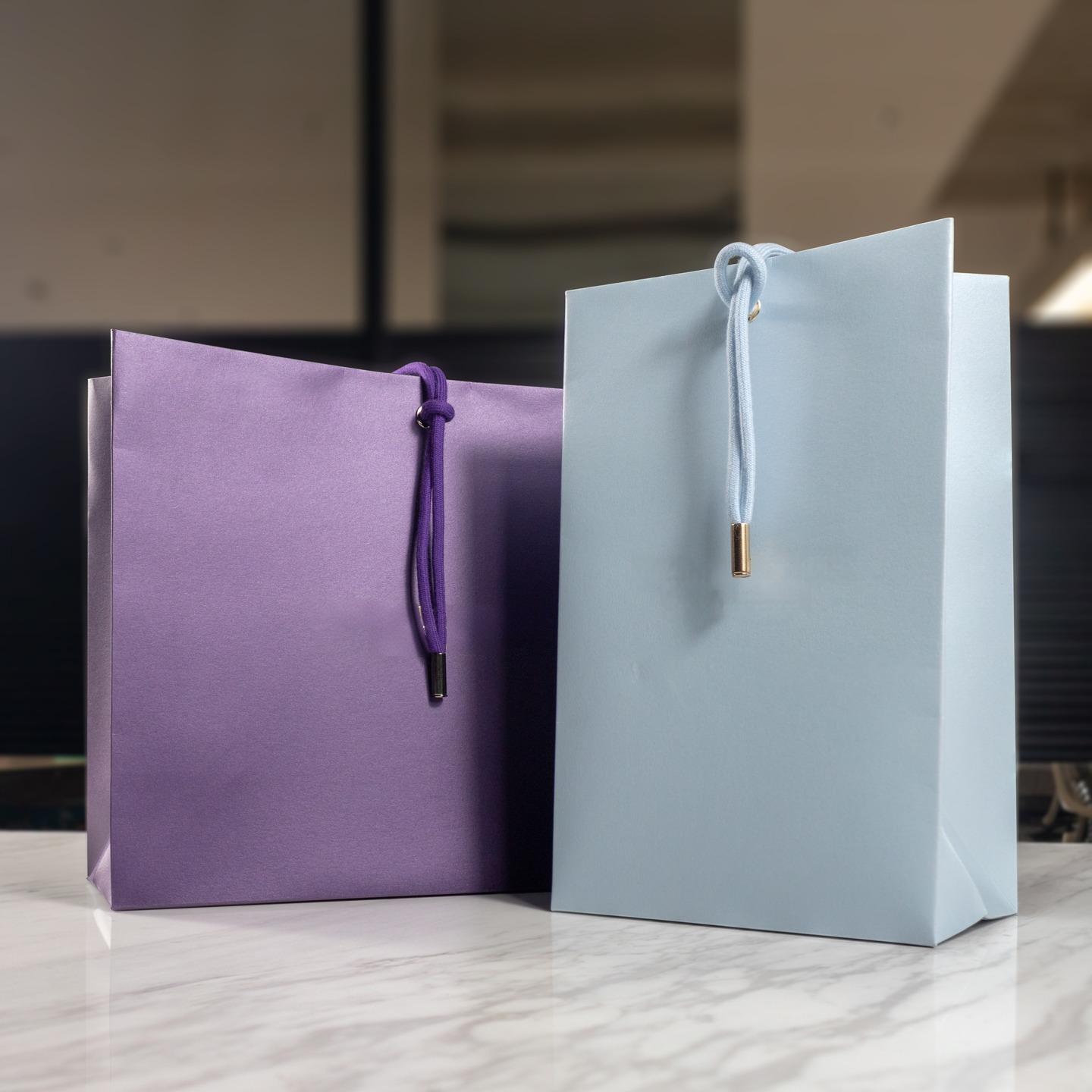
5. How to Boost a Jewelry Brand’s Perceived Value with Custom Euro Tote Bags
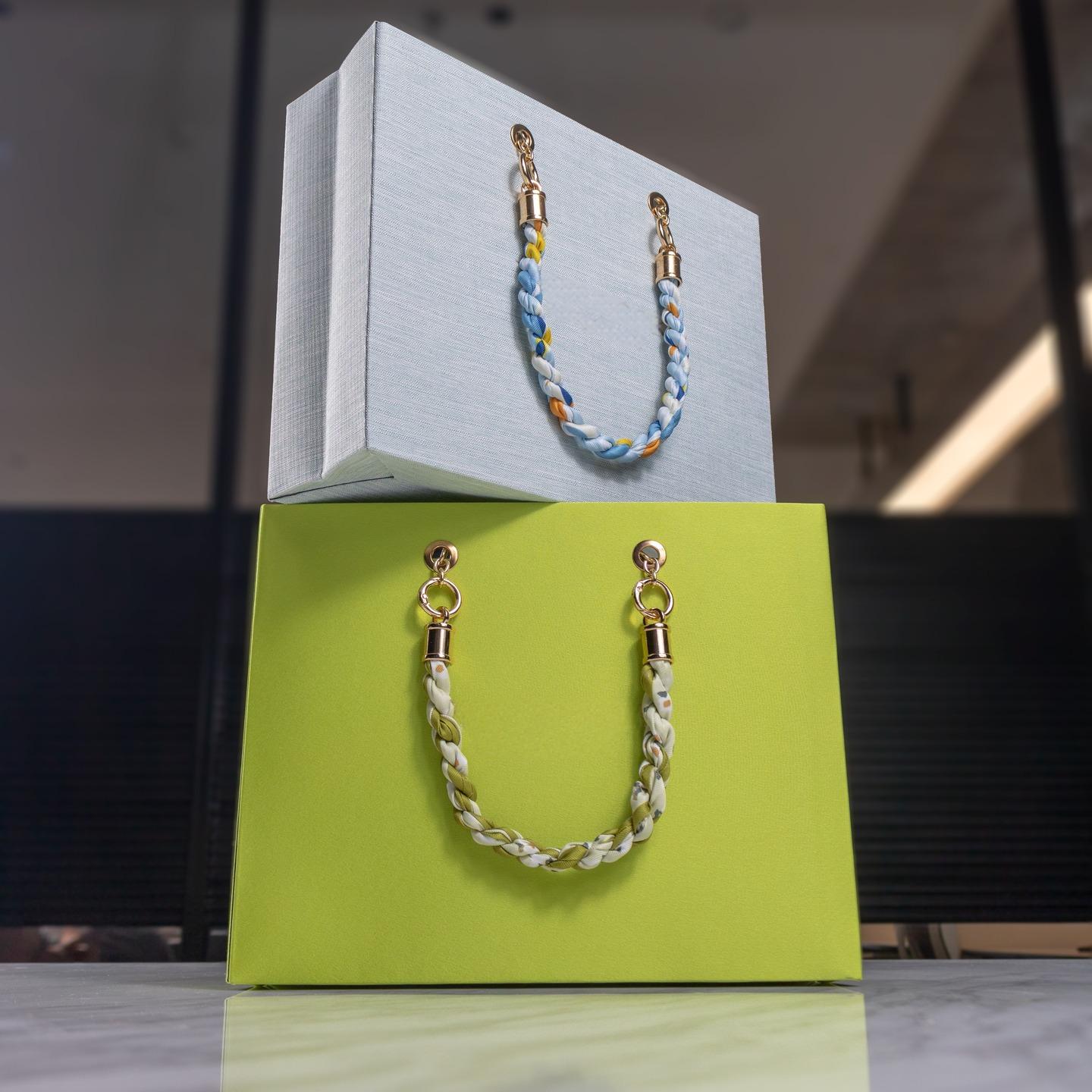
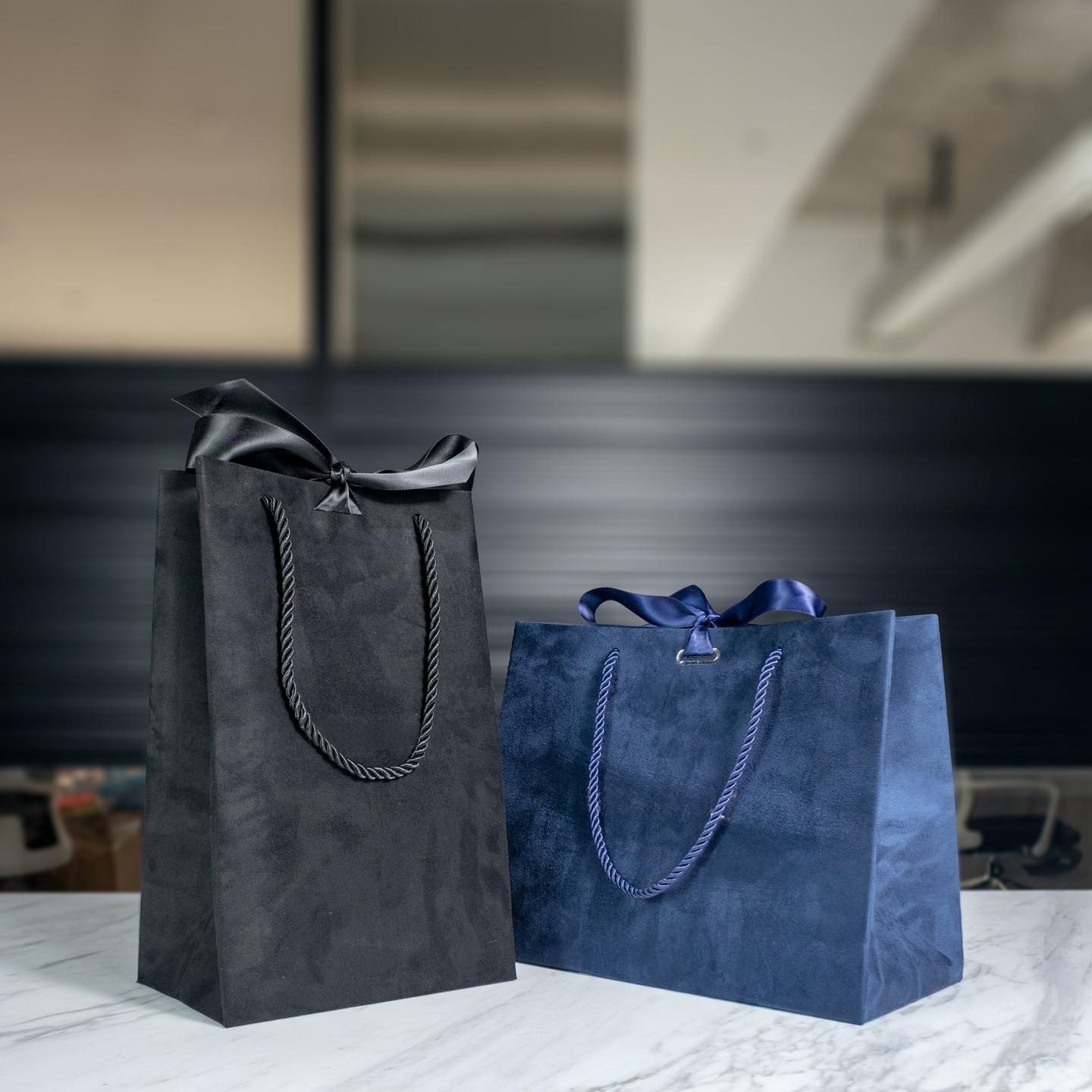
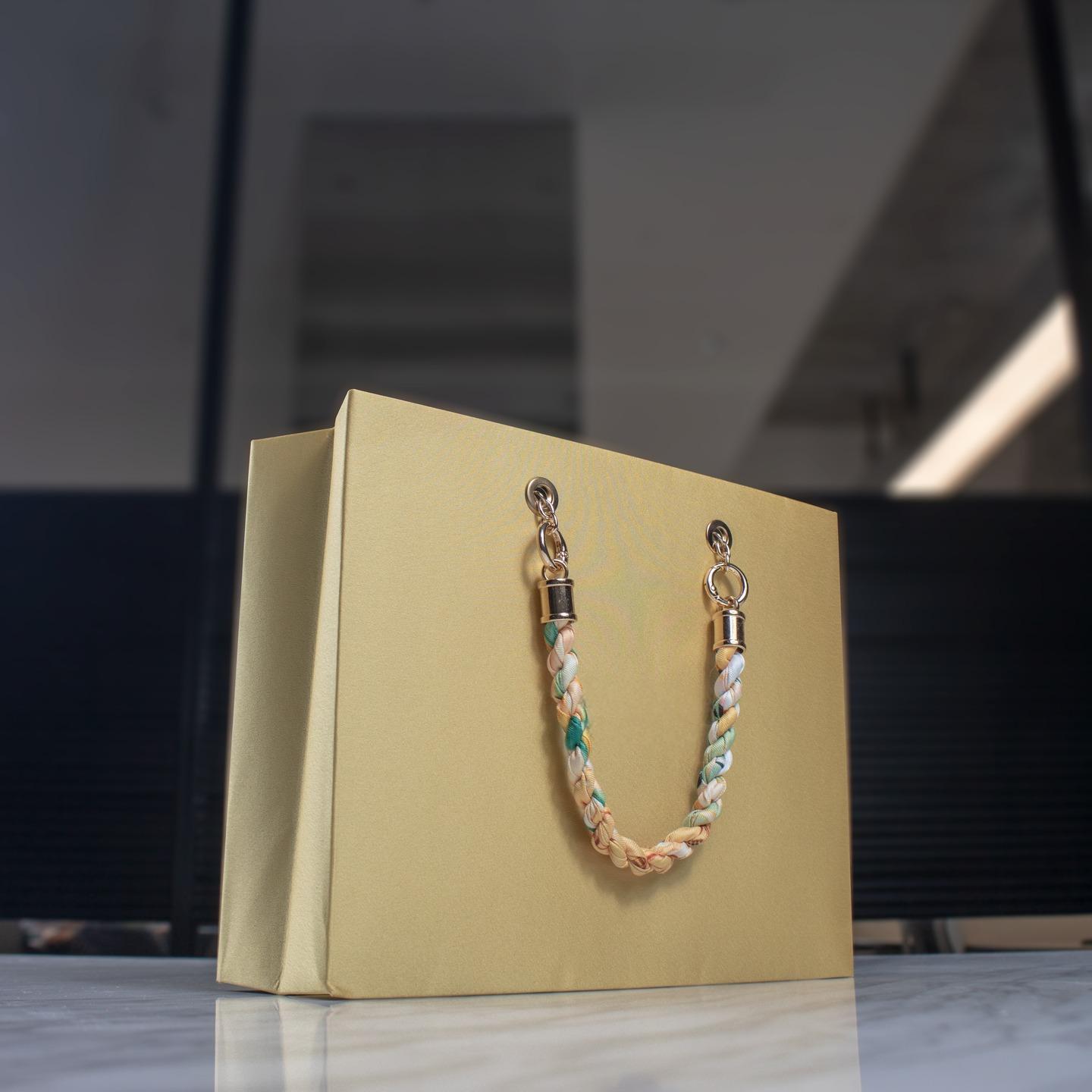
Though Custom Euro Tote bags are not traditional carriers closely tied to jewelry brands, they can effectively elevate a brand’s perceived value among consumers when smartly aligned with the brand’s core values and target audience demands.
Here are the core strategies:
A. Amplify Brand Culture & Aesthetics
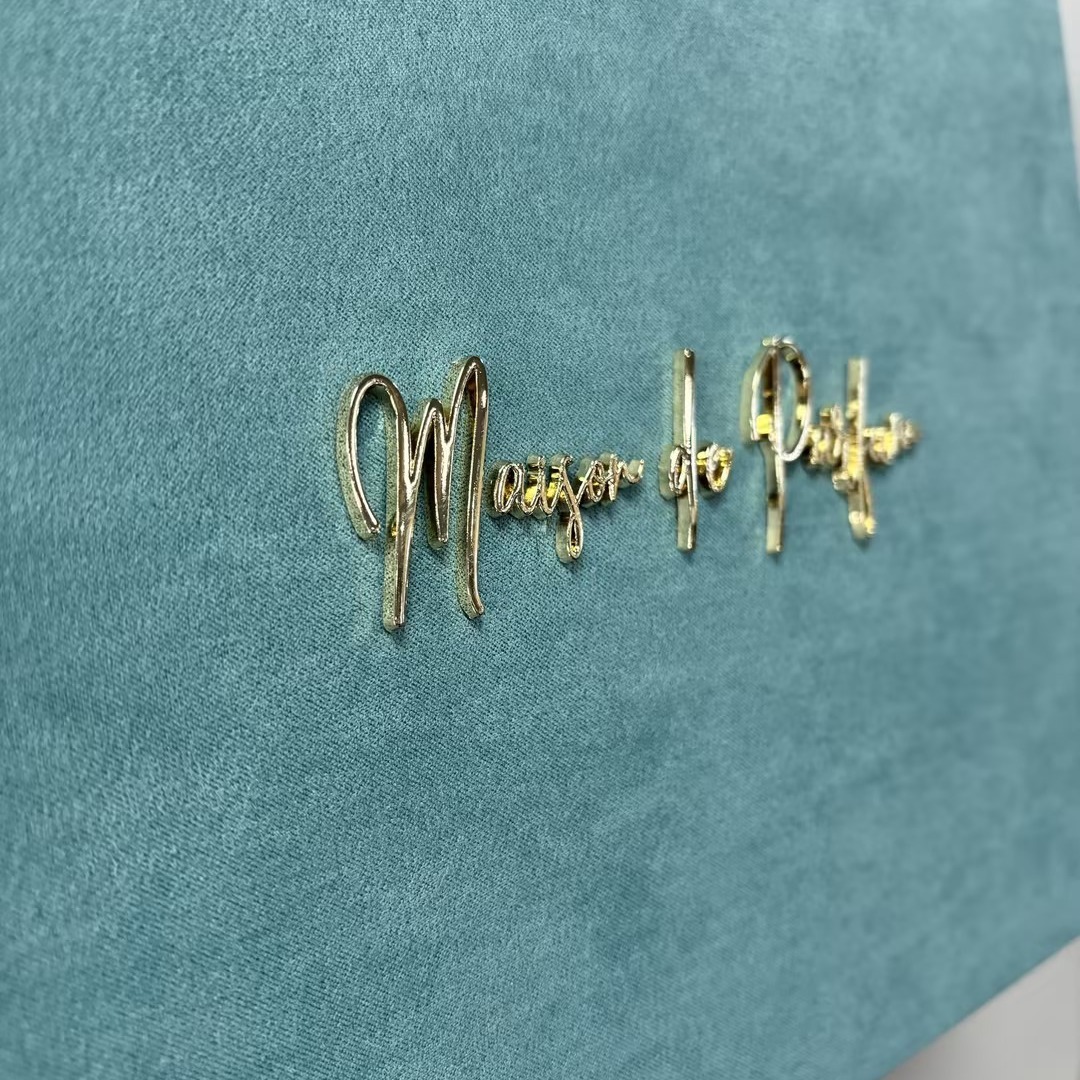
Design integration: Incorporate iconic brand elements (logo, classic motifs, craftsmanship highlights) into Custom Euro Tote bags—such as metallic finishes, gem-inspired hues or traditional craft patterns—to subtly strengthen consumers’ brand awareness.
Style matching: Choose Euro Tote bag styles and materials that fit the brand positioning. For luxury jewelry brands, opt for premium leather or silk with exquisite metal hardware or embroidery to mirror the luxury of jewelry pieces. For trendy brands, go for modern, personalized designs to capture young consumers.
B. Build Immersive Experience Scenarios
In-store display: Display luxury jewelry carrier bags alongside jewelry in stores (e.g., next to display cases or on mannequins) to showcase styling combinations. This provides outfit inspiration, creates a life-like brand vibe, and lets consumers see jewelry as more than accessories but a part of their lifestyle.
Themed events: Host offline events like jewelry styling workshops or fashion salons centered on Euro Tote bags. Offer custom Euro Tote bags as gifts or rewards to deepen emotional bonds with consumers and expand brand reach via event publicity.
C. Offer Personalized & Exclusive Experiences
Customization service: Launch customizable Euro Tote bags—let consumers pick colors, materials, motifs, and add exclusive brand logos or personalized text. This caters to their demand for uniqueness, makes them feel valued, and lifts thebrand's perceived value.
Member-exclusive perks: Include Euro Tote bags in the membership program (exclusive for members or free gifts with jewelry purchases). This boosts member belonging and loyalty, and attracts potential consumers through word-of-mouth.
D. Integrate Digital Marketing & Social Media Outreach
Online showcase: Feature Euro Tote bag-jewelry collocations and usage scenarios on official websites and social platforms with high-quality photos and videos. Collaborate with fashion bloggers and influencers to share collocation content for broader brand exposure.
Interactive campaigns: Launch online activities (best jewelry collection contest, Euro Tote bag design competition) to boost engagement and stickiness. Collect consumer feedback to refine product design and marketing strategies.
In short, Euro Tote bags can act as a bridge between jewelry brands and consumers. Customers perceive the jewelry inside to be of higher financial value, shaping a richer, more vivid brand value perception, and ultimately enhancing the brand’s market competitiveness and influence.
6. Colorimetry: The Science of Brand Fidelity
For branded retail bags, color is identity. The printing method dictates the fidelity.
A. Flexography (Kraft Limitations)
Printing on brown Kraft is subtractive. The brown base absorbs light, shifting colors towards yellow/black. White ink appears grey. Flexo plates also suffer from low screen rulings (<100 LPI), causing gradients to band.
B. Offset Lithography (Euro Tote Precision)
Euro Totes are printed on white C1S paper using Offset Lithography. This allows for:
1. Delta E < 2.0: We can match Pantone colors with imperceptible deviation.
2. High LPI: 300+ Lines Per Inch allows for photorealistic imagery.
3. Spectrophotometer Verification: We measure ink density during the run to ensure the 1st bag matches the 10,000th bag perfectly.
7. Surface Engineering: Dyne Levels & Foil Adhesion
Hot Stamping (Foil) requires precise surface tension management.
• Kraft Porosity: The foil adhesive absorbs into the fibers, leading to 'picking' and jagged edges.
• BOPP Surface Tension: On a Euro Tote, we treat the laminate to a specific Dyne level (>38 dynes/cm). This ensures the foil adhesive wets out perfectly, creating a mirror-like, razor-sharp impression that reflects light and catches the eye.
8. Marketing Physics: The CPM (Cost Per Mille) Calculation
Procurement focuses on the Unit Price. CMOs focus on CPM (Cost Per Thousand Impressions).
• Kraft Bag ($0.30): Discarded after 1 use. 50 Impressions. CPM = $6.00.
• Euro Tote ($1.00): Retained for 3-6 months. Reused for lunch/gym/travel. 2,000 Impressions. CPM = $0.50.
Conclusion: The 'expensive' Euro Tote is mathematically 1200% more efficient as a media buy.
9. FAQ: Technical Sourcing Questions
Q1: What is the minimum GSM for a luxury jewelry Euro Tote?
A: We recommend 210 GSM C1S art paper. Anything below 190 GSM will show 'wrinkles' at the fold lines and transmit internal ridges. For larger bags, 250 GSM provides the necessary structural rigidity to prevent warping under load.
Q2: What is the difference between 'Spot UV' and 'Varnish'?
A: Varnish is applied inline on the offset press and is relatively thin (~2-3 microns). Spot UV is applied via a separate screen printing process and is much thicker (~15-20 microns). This height difference creates a tangible, raised effect that engages the customer's sense of touch.
Q3: Are knotted handles better than glued handles?
A: Mechanically, yes. A knot is a physical geometric lock. It is independent of chemical adhesion. Glued handles rely on Van der Waals forces, which can be disrupted by heat (>50°C) or humidity, leading to catastrophic failure.
Q4: Can we use hot stamping on Kraft bags?
A: Yes, but with diminished quality. The porous surface of Kraft absorbs the foil adhesive, leading to low edge definition. On a laminated Euro Tote, the foil sits on top of the smooth film, resulting in razor-sharp resolution.
Q5: Is 'Soft Touch' lamination worth the extra cost?
A: Soft Touch adds a tactile 'velvet' feel that increases perceived value. However, it is susceptible to fingerprints. For dark colors (Black/Navy), we recommend 'Anti-Scuff' Matte lamination instead to maintain a pristine look.
Q6: How does lead time compare?
A: Machine-made Kraft bags are fast (2 weeks). Euro Totes are 'Slow Luxury,' requiring 4-5 weeks due to the manual labor of folding and knotting. Brands must forecast inventory 60 days out to utilize Euro Totes effectively.
10. Conclusion: The Convergence of Engineering and Art
The Euro Tote Bags are the final handshake between the brand and the consumer. A flimsy handshake inspires no confidence. As a premier jewelry packaging manufacturer, we engineer bags that extend the luxury experience from the store to the customer's home.
Turn your customers into brand ambassadors. Partner with Annaigee Jewelry Box to craft a mobile advertising asset that delivers ROI long after the purchase is made.

Quick links
Products
Contact us
Contact: Veronica Chang
Contact number: +86 15622157335
Email address: veronicazhang@aliyun.com
WhatsApp: + 86 15622157335
Address: No.2, Tangjiao Tenth Street, Lilin Town, Zhongkai High-Tech Zone, Guangdong, China
We are confident to say that our customization service is outsatnding.